

Understanding Fungal Types in Agriculture and Soil Ecosystems
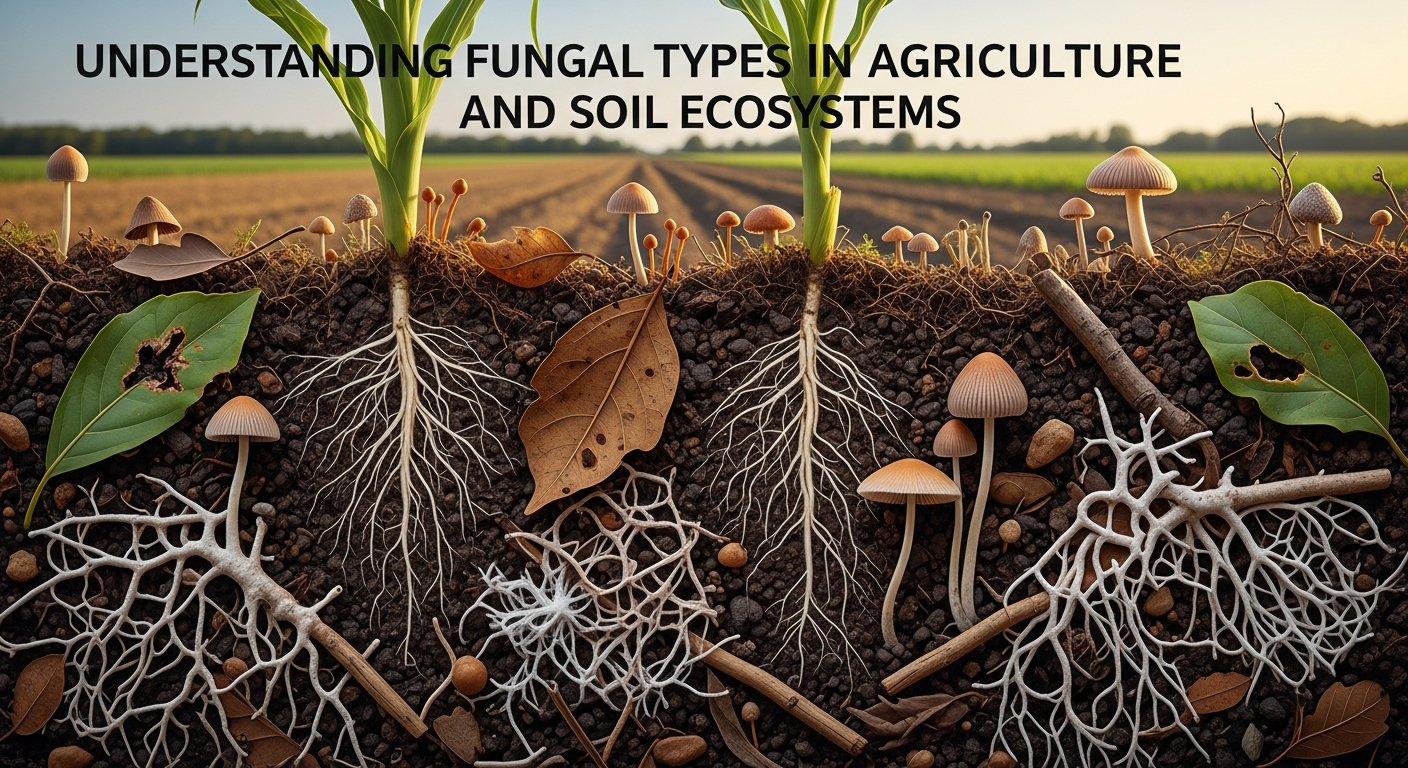
Fungi are the most common organisms on Earth, occurring worldwide in a variety of forms. The association between fungi and agriculture started thousands of years ago, and they continue to play an important role in how crops are grown today.
The presence of fungi breaks down organic matter in soil, allowing for the cycling of nutrients (N, P, C, etc.) from decaying materials into usable nutrients for crops.
Fungi recycle nutrients to enhance soil and support sustainable practices; they also make the soil healthier and therefore more productive than soils that do not contain fungi.
Fungi are not only great decomposers, but also have a symbiotic relationship with plants; i.e., they're both protecting plants from pests and enabling nutrient cycling through plant uptake of stored nutrients. To fully appreciate the many different varieties of fungi, as well as their myriad roles, you'll need to understand how to keep your ecosystem, crops, and soils healthy through sustainable practices.
Why Knowing Fungal Types Matters in Agriculture
Fungi are one of the drivers in the productivity of agriculture, but they are hidden underground. Understanding the different types of fungi helps farmers and agronomists (a person who studies the production of crops) to make informed decisions in their soil management plan, crop protection, and sustainable inputs.
Different fungi have many functions; they decompose organic matter and form beneficial relationships with plants, which means that knowing the different types of fungi allows for the shift from chemical dependence to natural, biological, and balanced farming systems.
Importance of Fungi in Crop Production
Fungi can have direct impacts on crops through their abilities to provide crops with increased nutrient availability and to protect crops against environmental stresses and diseases. Beneficial fungi will either live with the roots of a plant (called "mycorrhizae") or in the soil. The beneficial fungi can support a crop throughout their life cycle.
Some Key Functions of Fungi in Crop Production:
- Fungi break down complex organic matter into plant-available nutrients.
- Fungi increase phosphorus, nitrogen, and micronutrient uptake.
- Fungi help follicle (root) and plant growth.
- Fungi out-compete harmful pathogens.
Role of Fungi in Soil Ecosystems
The soil ecosystem cannot function without fungi and must remain biologically active and fertile. Each type of fungus forms a network of filaments connecting soil particles, which creates a long-term enhancement to soil quality.
The principal functions of fungi in the soil ecosystem are:
- Improving so aggregation and structure
- Increasing the ability of a soil to retain water
- Fostering a diversity of soil micro-organisms and maintaining balance
- Facilitating the process of carbon sequestration and nutrient recycling

Why Farmers Should Study Fungi Different Types
Modern agriculture relies on producing agricultural products in a way that is cost-effective and environmentally sustainable; this requires an understanding of fungi and how they function in the soil ecosystem. Understanding the various types of fungi allows farmers to use beneficial fungi and avoid using practices that could harm soil life.
Advantages of learning about the different types of fungi:
- Selecting appropriate bio-fertilizers and soil amendments
- Reducing the amount of fertilizer and pesticides applied in excess
- Increasing the long-term fertility and sustainability of the soil and crops Produced
- Enabling areas of sustainable agriculture to maintain climate resiliency and regenerative practices
Practically, by understanding how the different types of fungi function in the field, farmers can change their perception of the soil as a growing substrate, to viewing the soil as a living bio-culture, which supports successful crop production for each season.
Major Fungal Types Found in Agricultural Systems
Fungi are important components of agricultural soils. They are diverse and work together to decompose organic matter; provide nutrient cycling; support nutrient cycling, have a beneficial effect on the growth of plants and contribute to the dynamics of disease. In order to effectively manage agricultural soils and encourage beneficial fungi while discouraging harmful fungi, it is important for growers to know about the fungi present in their farming environments.
Ascomycetes in Farming Environments
Ascomycetes are a group of fungi that can be found in nearly every type of agricultural soil. Many of the decaying and decomposing fungi that are beneficial for agriculture come from ascomycete lineages.
In agriculture, ascomycetes perform a number of important functions.
- They help to decompose crop residue and organic material.
- They provide nitrogen and phosphorus as nutrients, which they then make available to crops to grow.
- They allow the amount of carbon within soils to increase.
- They include both beneficial organisms and some that cause diseases in crops.
Agricultural Benefits of Ascomycetes: Ascomycetes are important for return to the soil of nutrients in a form that is usable by crops, when properly utilized within a balanced system.
Basidiomycetes and Their Agricultural Impact
Basidiomycetes fungi play an important part in degrading difficult-to-degrade organic substrates like cellulosic materials, thus providing a significant foundation for soil formation and sustainable fertility.
Basidiomycete Functions In Agriculture Are:
- Decomposition of woody debris, crop residues
- Soil aggregation and aeration
- Nutrient recycling in perennial agriculture systems
- Beneficial mushroom fungus and pathogens to plants
- Importance Of Basidiomycetes:
Basidiomycetes provide resiliency to soil health, through maintaining a functional ecosystem as seen within orchards and agroforestry systems. Additionally, maintaining these functional ecosystems in high residue retention fields.
Zygomycetes, Chytrids, and Glomeromycota
Fungi in this group represent a wide array of forms with specialized functions within agricultural soils (e.g., fast degradation of organic substrates, symbiotic exchange of nutrients).
Zygomycetes:
- Rapidly degrade fresh organic materials
- Contribute to early-stage composting processes and subsequent waste breakdown
Chytrids:
- Adapted to wet/muddy soils
- Aid in recycling nutrients within flooded and/or irrigated agricultural systems
Glomeromycota:
- Utilize arbuscular mycorrhiza to associate with roots of crop plants, enhancing the uptake of phosphorus and micronutrients
- Facilitate drought resistance and promote root expansion through enhanced root mass.

Different Types of Fungi: Molds, Yeasts, and Mushrooms
The role of fungi in agriculture and soil ecology is vital. They perform all the following functions: Decomposition; The conversion of nutrients to the soil; Formation of Soil, as in the growth of plants; Food Production. The most prevalent types of fungi in agriculture are Molds, Yeast, and Mushrooms. To successfully manage your soil, agricultural by-product, and crop residue, a logical understanding of the types of fungi will allow for increased sustainability.
Molds in Soil and Crop Residues
Molds are a type of filamentous fungus, which grows in soil, compost, and on decaying plant material. Molds are important in that they are responsible for breaking down any remaining organic matter after harvesting and converting it into available forms of nutrients that can return to the soil.
Molds are important to Agriculture for the following Reasons:
- To Decompose crop residues such as straw and stubble.
- To Convert organic materials (such as compost) into nutrient forms that are available to the soil.
- To Support crop production through physical binding of soil particles.
- To Support Nutrient cycling in agricultural ecosystems.
Yeasts Used in Agro-Industries
Yeasts are single-celled fungi commonly utilized in agriculture and the fermentation of agricultural products. In contrast to molds, which mainly serve as a source of enzymes for breaking down sugars into alcohol, carbon dioxide and other products, yeasts are more involved in the transformation of sugars into other compounds for use as sources of energy or as by-products of fermentation.
Yeast Use in Agribusinesses:
- Fermenting bioethanol and biogas.
- Activating compost and processing organic wastes
- Creating bio-stimulants and organic fertilisers
- Processing foods and animal feeds
Yeasts contribute to sustainable farming by enabling added value to be captured from agricultural products and reducing organic waste through fermentation methods.

Mushrooms as Edible and Decomposer Fungi
Mushrooms are visible and economically important fungi. They are both significant food crops due to their high protein and nutrient content, but they are also significant decomposing fungi in the agricultural sector.
Key Activities of Mushrooms in Agriculture:
- Cultivated as food with high protein/nutrient content
- Decompose agricultural waste (i.e. straw, husk, etc.)
- Convert waste into compost or organic manure
- Increase the amount of organic matter in soil.
Beneficial Fungal Types in Agriculture
Fungi play a vital role in agricultural soil as one of this biofilm's greatest biological resources. Fungi contribute to nutrient cycling and improve the physical properties of soil and protect plants from stress and diseases. Understanding beneficial fungal types can allow a farmer or gardener to use soil biology to increase crop health and yield. Some fungi have a positive effect on sustainable agriculture, while some fungi are primarily used to support symbiosis between plant roots, decompose organic material and prevent the growth of disease-causing pathogens.
Mycorrhizal Fungi and Root Symbiosis
Mycorrhizal fungi live in close association with plant roots. They are one of the most important types of beneficial fungi for agriculture because they expand the root system and help plants to absorb nutrients from soil and water.
Agricultural Benefits
- Enhance phosphorus and other nutrient uptake
- Enhance root growth and surface area
- Increase drought tolerance and produce more resistant plants
- Assist in improving long-term soil fertility.
- Importance of Mycorrhizal Fungi
Mycorrhizal fungi form the foundation of healthy soils, and they are used in both organic and sustainable farming systems to reduce the need for chemical fertilizers.
Decomposer Fungi for Organic Matter Breakdown
Decomposer fungi are vital members of the fungal world that provide a means of decomposing plant waste, crop residue, and organic matter from the Earth back into the environment to be available again for plant uptake.
By breaking down organic material, decomposer fungi provide:
- Degraded straw, leaves and crops
- Nitrogen, phosphorus and carbon
- Improved soil structure and formation of humus
- Microbial diversity
Benefits Decomposer fungus has on soil health, through the rapid breakdown of organic matter assists to keep soils fertile and avoid nutrient lock up.

Biocontrol Fungal Types
Biocontrol fungi can be found throughout nature and are healthy forms of different types of fungi used to fight off soilborne plant disease pathogens. These types of fungi can suppress or compete with plant disease organisms and, therefore, can help control disease.
Advantages of using biocontrol fungi:
- Control of disease-causing fungi and organisms
- Reducing crop disease
- Less reliance on chemical fungi treatments
- Creating healthier root zones
The reasons for using biocontrol fungi: they help maintain a balanced soil ecosystem, while producing crops without any chemicals and excess residues.
Harmful and Pathogenic Fungal Types in Crops
Although many different types of fungi are beneficial to plants and the soil, some of these types of fungi can be damaging to crops and represent significant challenges for agriculture. Plant pathogenic fungi infect plants, create contamination in harvested crops, and significantly reduce the yield and quality of crops. Farmers must understand the various fungal types that can harm their crops in order to prevent potential losses to their crops, create plan(s) for protecting the safety of food, and manage plant disease effectively.
Plant Pathogenic Fungi Examples
Plant pathogenic fungi are one of the most destructive types of fungi in agriculture, producing diseases that can affect the leaves, stems, roots, and fruits of crops.
Examples of Common Plant Pathogenic Fungi:
- Fusarium, which produces wilt, root rot, and seedling diseases.
- Alternaria, which leads to leaf spots and blights.
- Puccinia, which produces rust disease in cereals.
- Magnaporthe, which produces rice blast disease.
Negative effects on plant vigor and photosynthesis due to reduced foliage and photosynthetic area.Poor root development and nutrient uptake due to poor root development. To create conditions for rapid crop failure and yield loss, fungi produce spores that can spread rapidly under the right humidity and temperature conditions. Identifying and managing billips is crucial.
Toxic Molds in Stored Grains
There are many types of fungi that may grow on plant products after harvesting, which contaminate the grains with toxic compounds, creating health hazards for humans and animals.
The Primary Types of Toxic Storage Fungi Include:
- Aspergillus - Produces aflatoxins in corn and peanuts;
- Penicillium - Spoils stored grains and beans;
- Fusarium - Produces mycotoxin in corn and wheat.
What Makes Storage Fungi Dangerous?
- Storage Fungi:
- Can Affect the Quality and Market Value of The Grain
- Can Produce Mycotoxins that are Harmful to Livestock and Humans
- Can Result in the Rejection of The Produce from International Markets.

Economic Losses Due to Fungal Diseases
Worldwide, fungal disease causes great financial hardship for the agricultural sector. Crops affected by fungal disease experience yield loss and decreased profits.
Economic Effects:
- Significant yield reductions (10-50%) in the most severely affected areas
- Higher costs incurred from purchasing fungicides and managing fungal disease
- Losses in terms of exportation of crops that have been infected with weeds, therefore contaminated
- Reduced shelf life and decreased marketability of crops due to contamination
Fungal Types in Everyday Agricultural Practices
Fungi are a fundamental part of every agricultural operation and offer vital help to farmers and gardeners by providing many benefits: from enhancing the quality of soils, cycling nutrients, protecting crops, and producing food. By understanding the various types of fungi that exist, farmers and gardeners can take advantage of fungi's natural biological processes to increase production while reducing the need for chemicals.
Fungi in Composting and Soil Amendment
Many different types of fungi have the ability to decompose plant material into a form of nutrient most easily utilized by plants (decomposers). The ability of fungi to decompose may be the most widely recognized role in a composting system or amending soil in agriculture.
The Function of Fungi in Composting and Soil Health Are:
- Decompose crop leftovers, straw, and organic wastes into fertilizing nutrients
- Release fertilizing nutrients to the soil such as nitrogen, phosphorus, and potassium
- Build and improve soil structure and capture water
- Support the microbial life of soils and improve soil temperature.
Fungal Use in Food and Feed Production
The use of fungi in agriculture extends far beyond the soil. Within this industry, fungi play a large role in the production of food and livestock feeds. The various types of fungi that are used here assist in enhancing feed quality, increasing feed digestibility, and making nutrients in feeds more available to livestock.
Applications in Agriculture - Commonly Found in Food and Livestock Feed Production:
- Fermenting animal feeds to enhance digestibility
- Producing enzymes and vitamins
- Enhancing the availability of proteins in livestock feeds
- Reducing the presence of anti-nutritional elements within raw materials.
Fungi in Integrated Pest Management
Certain species of fungi can be found naturally in nature and are known to naturally suppress and antagonize harmful pests and plant diseases. The use of the beneficial types of fungi in IPM (Integrated Pest Management) provides the opportunity for many growers to have a reliable means of controlling and/or managing pest and pathogenic organisms impacting their crops without harming crops or the environment.
The Role of Fungi in Pest and Plant Disease Control:
- Suppression of soil-borne plant pathogens
- Parasitism of insect pest naturally
- Reduction of dependence on chemical pesticides
- Support for environmentally friendly protection of crops.

Modern Agricultural Applications of Fungal Types
Biological products from fungi are becoming integral to modern agriculture for their ability to restore soil fertility, improve crop yields, and promote sustainable farming practices. Instead of simply serving as organic matter decomposers, fungi now serve as valuable parts of a farmer's toolkit enabling farmers to use less fertilizer and create a more natural, environmentally friendly agro-ecosystem.
Fungi in Biofertilizers and Soil Inputs
Fungi provide essential ingredients for the production of bio-fertilizers and soil amendments. They interact with organic matter naturally, developing a symbiotic relationship with the crops and creating an efficient means of converting organic matter into nutrients(in the form of bio-fertilizers). Fungi play important roles as follows:
- Improve phosphorus and micronutrient availability in the soil
- Promote root growth and the uptake of nutrients from the soil
- Enhance and support the growth of beneficial microorganisms in the soil
- Decrease the need for chemical fertilizers
Industrial and Biotechnological Uses
In addition to being used to enrich the soil, fungi also have many applications within agricultural biotechnologies and agroindustries. Fungi create multi-functional products, such as enzymes, bioactive substances and naturally occurring growth regulators. All of these products aid in production agriculture as well as food processing.
The following are the most common industrial applications of fungi:
- Creating bio-enzymes for conditioning soils
- Creating biopesticides and biocontrols
- Creating fermentation products from agricultural feedstocks
- Speeding composting and recycling of wastes
Sustainable Farming Through Fungal Innovation
Fungi are becoming an important and foundational part of sustainable and regenerative farming systems. Through the use of beneficial fungi, agriculture can contribute to building soil resiliency, creating increased yields and lessening environmental impact.
How Fungi Can Enhance Sustainability:
- Improved soil health, enhanced water holding capacity
- Largely increased plant stress and disease resistance
- Reduced chemical fertilizer and pesticide inputs
- Increased levels of biodiversity in agricultural soils

FAQs:
Q1. What are fungal types in agriculture?
Fungal types in agriculture include beneficial, neutral, and harmful fungi that influence soil fertility, plant health, and crop productivity.
Q2. Why are different types of fungi important for soil health?
Different types of fungi improve nutrient cycling, soil structure, and microbial balance essential for healthy soils.
Q3. Are all fungi harmful to crops?
No, many fungi are beneficial and support plant growth, while only some cause crop diseases.
Q4. How do farmers control harmful fungal types?
Farmers manage harmful fungal types through resistant crops, proper crop rotation, and biological or chemical control methods.
Q5. What fungal types are used as biofertilizers?
Mycorrhizal fungi, Trichoderma, and decomposer fungi are commonly used as biofertilizers to improve soil fertility and crop growth.
Conclusion: Embracing Fungal Types for Sustainable Agriculture
Fungi are essential contributors to the formation of productive agricultural systems and healthy soils by supporting the nutrient cycle, enhancing soil structure and improving plant growth in a natural manner. Learning the different types of fungi allows farmers to see the importance of the beneficial types as partners in crop production, reducing their input costs and enhancing fertility for many years.
Implementing beneficial fungus into Farming Methods can help create a Sustainable, Resilient and Environmentally Friendly system of Agriculture. By introducing many types of fungi into a modern way of Farming, Farmers will be able to Decrease their Dependence On Chemicals, Protect The Environment And Create A Constant Supply Of Food. Fungi are therefore an integral part of Sustainable Agricultural success.