

Maximize Maize Yield with the Right NPK Fertilizer Strategy
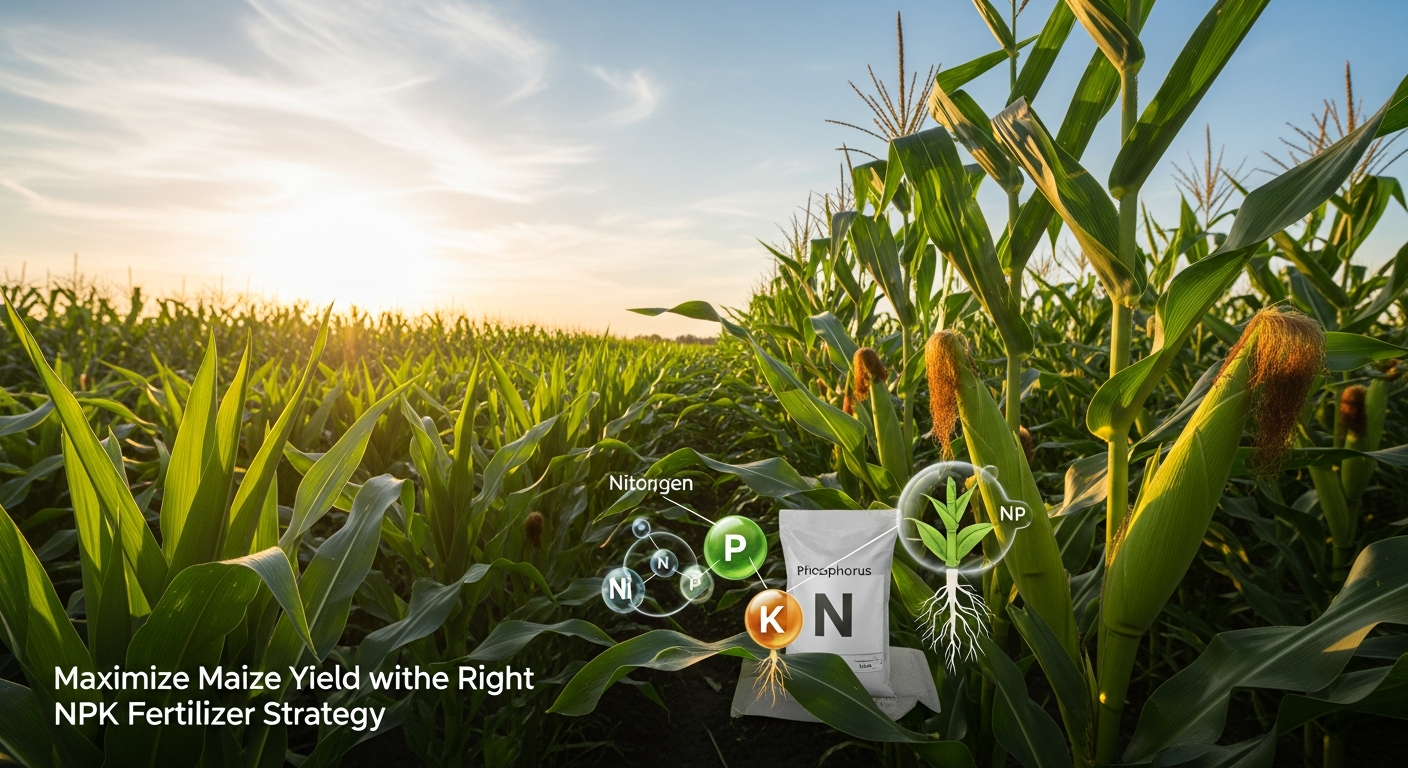
Maize has been cultivated for centuries as a food crop throughout Africa, Asia, and the Americas. It is one of the world's most widely grown food crops because it provides an abundance of food for a large number of people. Maize is by far the most important cash crop grown in developing nations and has also been used as a source of animal feed. For maize to reach maximum yield potential, farmers must ensure they use the proper type of fertilizer, specifically NPK (Nitrogen, Phosphorus, Potassium).
NPK Fertilizer provides maize with the essential nutrients needed for optimal growth and productivity. NPK Fertilizers have been proven to be effective in increasing yield and crop quality.
NPK Fertilizers not only give plants the nutrients that are necessary for growth, but they also provide nutrients to the soil. The basis of all NPK Fertilizers is the three macronutrients (N, P, K)—Nitrogen, Phosphorus, and Potassium. Nitrogen is an important component of chlorophyll, which is the green pigment in leaves
Therefore, nitrogen promotes healthy leaf growth. Phosphorus is essential for the formation of strong root systems and for stimulating rapid plant development. Potassium aids in plant health, enhances disease resistance, and improves the quality of maize grain. Using a proper fertilizer management strategy, maize plants will continue to grow to full maturity, producing higher-quality ears, which are ready for harvest.
Understanding NPK Fertilizer and Its Importance for Maize
Maize is one of the most popular food crops and will need to be fertilized with a balanced amount of fertilizer to produce high quantities of food crops with healthy roots. NPK fertilisers provide nutrients that maize plants need to grow healthy and produce a high yield. These nutrients support many different aspects of maize plant growth, such as strengthening roots, increasing leaf and stem size, increasing the size and quality of the maize grain.
What Is NPK Fertilizer?
NPK Fertilisers refer to a special type of "plant food" that provides the three primary macronutrients that plants require for optimum health - Nitrogen (N), Phosphorus (P) and Potassium (K). NPK Fertilisers can be formulated in many different combinations and ratios for use on different types of plants in order to meet the specific nutrient needs of that particular crop as the crop grows.
- Nitrogen (N): Provides nutrition for leaves and stems of maize.
- Phosphorus (P): Provides nutrition for the root system and to allow early maize seedlings to produce flowers.
- Potassium (K): Increases the plants’ ability to withstand diseases and improve the overall strength of the plant, and improves the quality and quantity of maize produced.
Examples of NPK Fertilisers for Maize
- 10-10-10 - Balanced NPK Ratio for General Growth
- 30-10-10 - High Nitrogen Content NPK Fertiliser for Vegetative Growth
Why Maize Requires Balanced NPK Nutrition
Balanced NPK is important for maize production due to the fast growth rates and the high demand for NPK nutrients throughout the maize plant's growth cycle.
- N is helpful in developing more green leaves (the more leaves, the more sunlight it absorbs) and increases the overall size of the maize plant. Without sufficient N, the maize plant will not develop into a big, robust plant to support photosynthesis.
- P assists the maize plant with root development, particularly in the early stages of development.
- K helps the maize plant hold water, provide additional drought tolerance and has a positive impact on overall crop resilience.
Application of the correct NPK fertilizer to maize will assist in providing the proper ratio of nutrients to promote healthy, productive maize plants.
Role of NPK Nutrients in Sustainable Agriculture
All agricultural systems require the use of NPK nutrients to maintain a productive, healthy and sustainable growing environment for crops, including maize.
- N is critical in maintaining soil fertility and promoting healthy plant growth without diminishing the soil productivity.
- P improves soil structure and supports the development of the maize root system, helping to increase drought tolerance.
- K assists the maize plant in preventing or resisting disease, and developing a strong and efficient maize plant which can withstand environmental stressors.
When NPK fertilizers are combined with organic and crop rotation practices on maize, it creates a sustainable, productive and efficient agricultural system, providing a constant supply of high-quality maize year after year.

The Science Behind Maize Nutrition and NPK Nutrients
To have healthy growth and produce good quality maize, maize plants need to be supplied with certain nutrients that help different phases of maize crop production. The three main NPK Nutrients—Nitrogen, Phosphorous, and Potassium—support the various phases of maize growth.
Each nutrient is critical to the development of maize from the early stages of vegetative growth to the formation of healthy roots, strong stalks, and mature, healthy grains. By understanding how each of these nutrients works within a maize crop, producers will be able to select the correct type and ratio of NPK Fertilizer to use, obtain maximum maize production, and thereby achieve maximum yield.
Nitrogen and Vegetative Growth in Maize
Nitrogen is necessary for the vegetative growth stage of the maize plant. Nitrogen is important to the plant's ability to produce healthy green leaves and green stems.
- Supports Leaf and Stem Development
- Supports healthy growth of the maize plant.
- Essential for the creation of proteins.
An NPK Fertilizer with a balanced ratio of N and P supports healthy vegetative growth of the maize plant and encourages maximum leaf production (photosynthesis).
Phosphorus for Root Development and Early Growth
- Key component of early growth
- Essential for developing strong roots
- Promotes quicker overall growth
Assists in flowering and production of fruit Using npk fertiliser for maize that contains sufficient phosphorus will allow maize plants to establish a robust root system capable of sustaining growth throughout the entire season.
Potassium for Stalk Strength and Grain Quality
Potassium strengthens the stalk of a maize plant and enhances the overall quality of the grains produced by the plant.
- Strengthens the stalk of the maize plant, making it more resistant to diseases;
- Regulates the movement of water into and out of the plant;
- Improves the end-use quality of grains by enhancing their physical size and taste.
By maintaining proper potassium levels in the soil through the use of npk nutrients provided by fertilizers, maize plants exhibit increased resilience to environmental stress and enhanced overall health, resulting in the production of high-quality grains.

Choosing the Right NPK Fertilizer for Maize Crops
The correct fertilizer will allow for high yielding maize crops through healthy plant establishment and growth. The appropriate nitrogen, phosphorus and potassium levels combined with improved soil management will assist each growth phase (establishment of seedlings to full maturity).
Through understanding NPK levels that are beneficial to maize crop production, you will be able to customize the fertilization process so that plants achieve desirable results and maintain a vibrant state of health during their life cycle.
Recommended NPK Ratios for Maize
The right NPK ratio is very important for maize crop production since the nutrient balance is different for each stage of growth:
- Initial Growth Stage - Higher nitrogen ratios (20-10-10) will help develop healthy leaves and stems.
- Flowering and Developing Seed - Change to lower nitrogen and higher phosphorus (10-20-10 or 12-24-12) for maximum root health and flowering.
- Fully Matured Maize - Balanced NPK formula (10-10-10) produces a healthy crop for producing fruit.
By utilizing the correct ratios, you can ensure your maize crops produce healthy kernels through vigorous growth.
Soil Testing Before Selecting NPK Fertilizer
Before you start using an npk fertilizer for your maize crop, check to see what nutrients your soil already has. This is done by testing your soil. A soil test can help you determine your:
- Presence of or lack of soil nutrients, which will help you determine what soil nutrient(s) you need to add.
- Proper distribution of nutrients in your soil, which will help you select a proper npk ratio of fertilizer to apply at application time so that your maize has the greatest chance for optimum development.
When you perform a soil test it helps ensure that you apply the proper type of NPK fertilizer to your maize plant and not apply unnecessary amounts of fertilizer and contribute to waste.
Matching NPK Nutrients with Growth Stages
The balance of nitrogen, phosphorus, and potassium should be in proper proportions for the different stages of growth of a maize plant.
- During the seedling phase, maize requires nitrogen.
- During the vegetative phase, maize will benefit from phosphorus.
- During the fruiting phase, maize requires potassium to provide quality fruit, disease resistance, and the greatest plant strength.
By adjusting your NPK fertilizer for your maize at different stages of development, you will provide maize with a consistent, strong growth cycle with a higher yield potential than you would without adjusting your fertilizer to the developmental stages of maize.

How and When to Apply NPK Fertilizer for Maize
Maize crops require a specific amount and type of NPK fertilizer based on when they are applied (timed with their growth stages). By timing your application correctly you can provide the crop with the nutrients it needs most at each stage of growth. Knowing how to best apply NPK fertilisers will lead to less wasted fertiliser, which will ultimately improve nutrient uptake by the maize crop.
Basal Application at Sowing
The Basal Application is how you apply NPK fertilisers (like when you sow) to your maize crop.
- When to Apply: Incorporate NPK fertilisers into the soil at the time of sowing. Make sure to mix thoroughly for even distribution.
- Benefits of Basal Application: Provides an early boost to the crop to establish strong root systems.
- Typical Ratios: Balanced ratios such as 10-20-10 are commonly recommended as they support the development of a strong root system.
Split Application for Better Nutrient Use
With split NPK applications for maize, you apply the total amount of NPK needed for the entire growing season in several applications throughout the growing season, instead of applying it all at once, thus ensuring that all three nutrients (N, P, Mg) are available to the plant.

Fertilizer Placement and Application Methods
Properly placing NPK fertilizers for maize will ensure that the NPK will be available to the plant in the correct location for maximum growth.
- Application Technique: The two most effective application techniques are banding and side-dressing, which allow for placing fertilizer at or close to the roots of the plant for maximum absorption by the roots.
- Placement Guidance: For side-dressing NPK fertilizers, apply them 2-3 inches away from the plant's base.
- Benefits of Properly Placing NPK Fertilizers: Provides this essential nutrient source during critical periods of plant development such as flowering and grain filling.
Comparing NPK Fertilizer with Other Fertilizer Options
For maximum yield from maize and healthy maize plants, farmers need to select the correct type of fertilizer. Farmers have used a lot of NPK fertilizers when growing maize because these fertilizers provide balanced amounts of the three major nutrients needed to support plant growth.
However, it is important for farmers to compare NPK fertilizer with other fertilizer types (e.g10: zero(Single Nutrients) and Organic) and make good choices according to their specific situation (e.g12: Organic Fertilizers).
NPK vs Single Nutrient Fertilizers
Compared to single nutrient fertilizers, NPK fertilizers provide a balanced supply of all three major nutrients necessary for plant growth. By providing only one type of nutrient in each application, single nutrient fertilizers could be useful in limited situations.
- NPK Fertilizer: Provides a balanced amount of all three major nutrients needed for plant growth
- Single Nutrient Fertilizer: Useful for specific situations where targeted deficiencies exist
- Ideal for: Plants require maximum nutrition vs. Correcting or avoiding excesses
Organic vs Inorganic Fertilizers in Maize Farming
Both organic and inorganic NPK fertilizers have their advantages and can work hand in hand; using organic fertilizers provides long-term benefits for the soil through improved soil health and continued support of soil microorganisms, while inorganic fertilizers offer fast-acting nutrients to crops.
- Organic Fertilizers - Slow release- increases soil structure over time
- Inorganic Fertilizers - Fast acting - provides immediate nutrition
- Best for - Sustainable farming and long-term sustainability vs. Immediate crop results
Integrated Nutrient Management Approach
The Integrated Nutrient Management (INM) strategy uses an integrated approach in that it includes NPK nutrients, organic inputs, and proper prescription-based application
- method(s) to improve soil and maximize maize yield. Through an INM approach, dependency on chemical fertilizer is decreased and sustainability is increased.
- INM Strategy - Organic Matter + Balanced NPK = Improved Soil and Increased Nutrient Uptake = Better Soil Fertility and Reduced Environmental Damage.
- Best Use for - Long-term sustainability for maize crops.

Common Mistakes to Avoid When Using NPK Fertilizer for Maize
NPK fertilizer on corn is a good approach but there are a number of frequent pitfalls that restrict corn plant growth and hamper harvest yields. These include excessive and insufficient application of NPK, as well as improper timing of application. Correcting these typical errors will enable the best results for corn plants utilizing NPK nutrients and consequently, the greatest yield from corn crop harvest.
Risks of Over-Fertilization
Over-application of NPK fertilizer on corn has adverse effects, as the excess nutrients are not adequately taken in by the corn plants, leading to the loss of nutrients through runoff into waterways and soil degradation, and the further decrease in the productivity of the corn plant.
How You Can Identify Over-fertilization
- Burning of Leaves: Leaf edges turn brown and withered due to excess nitrogen concentration.
- Too Many Leaves: Lush green growth of leaf material; yet, fewer flowers and/or ears relative to average yield.
- Physical Weakness of Root Systems: Lack of strong, fast-growing root systems due to high level of nutrient imbalance.
- Nutrient Loss to Leaching During Heavy Rain: Nutrients can wash away from the soil, preventing them from reaching the root zone.
To prevent over-fertilizing corn, always use the application quantities specified on the submitted label for the npk fertilizer, and make multiple small applications; do not do too many big applications of NPK fertilizer.
Problems Caused by Under-Fertilization
In contrast, when the maize plant does not have enough nutrition, it becomes stunted, causing the plant to produce smaller yields than would normally occur.
Visual Symptoms of Underfertilization
- Yellowish Leaves (Nitrogen Deficiency): The yellow coloration will begin at the tip of the oldest leaves and work its way down the plant as nitrogen is not available.
- Weakening Root System (Phosphorus Deficiency): When phosphorus is not present in the soil, the roots of a maize plant cannot fully develop. This reduces the ability of the maize plant to absorb water and nutrients from the soil.
- Poor Quality or Underdeveloped Ears (Potassium Deficiency): When potassium is insufficient, the maize ears will be underdeveloped. This will also cause maize plants to be susceptible to diseases.
The best way to avoid underfertilization of maize plants is to use an npk (Nitrogen Phosphate Potash) fertilizer that is chemically balanced for the soil composition as established by soil sample tests and for the requirements of the maize crop.
Importance of Timely Application
Timeliness is very important when applying npk fertilizer for maize. Application of npk at the incorrect time can lead to nutrient deficiencies and/or nutrient imbalances.
When to Apply NPK Fertilizer
- Before Planting: When planting maize using a balanced npk fertilizer you'll be guaranteed that there are adequate nutrients available for germination.
- After Emergence: When the maize plants begin to grow upward, apply additional nitrogen fertilizer to promote healthy leaf development.
- During Ear Development: During the ear development phase, applying potassium and phosphorus will provide the additional resources necessary for proper ear development and increased resistance to stress.
Timely Application of the right type of NPK fertilizer to maize will ensure that the crop receives adequate nutrients during growth resulting in stronger, healthier plants with increased yield potential.

Economic and Yield Benefits of Using NPK Fertilizer
By using NPK Fertilizer for maize, not only are the economic returns increased, but the yield potential of maize crops is also maximised.
Applying NPK nutrients in a balanced manner will provide the correct levels of nitrogen, phosphorus and potassium during different periods of growth, leading to healthier vegetation and greater yields for Farmers who optimise their application of NPK Fertiliser will experience more quantity and quality of their crop yields resulting in increased profits.
Yield Improvement with Balanced NPK Nutrition
The use of NPK Fertiliser for maize appears to produce greater overall crop health, resulting in improved yields.
- Nitrogen encourages strong foliar growth, permitting more light to be captured through the process of photosynthesis.
- Phosphorus enhances root structure so that the plant has a sturdy base.
- Potassium increases resiliency against diseases and improves overall quality of the maize crop.
A balanced proportion of NPK nutrients leads to larger and healthier cobs and consequently a greater total yield on a given acre of land.
Cost-Benefit Advantage for Farmers
Farmers who invest in NPK fertilizer for maize can expect to reap long-term benefits from their investments.
By utilizing NPK gradients (NPK) of fertilizers to produce maize will produce greater yields with the lowest amount of fertilization expenses.
- Less money spent on pest control by reducing the need to apply additional chemicals as NPK fertilisers provide everything needed for pest control within the application of the NPK nutrients.
- Using the proper amount of each NPK nutrient strengthens the plant's environment resistance allowing growers to reduce their losses to environmental-based production costs.
- Using the correct mix of NPK nutrient ratios for the crop maize in terms of growing will allow for a steady stream of increased or stable profit for the farmer each year.
Long-Term Soil Fertility and Profitability
Using NPK fertilisation does not simply benefit the individual crop, but over time through continued application of adequate NPK fertilisation into the soil, it will ensure continued and sustainable productivity from the soils over time.

FAQs:
Q1. What is the best NPK fertilizer for maize?
A balanced NPK fertilizer like 10-10-10 or 20-10-10 is ideal for maize, depending on soil conditions and growth stage.
Q2. When should NPK fertilizer be applied to maize?
Apply NPK fertilizer in split doses: once at planting and again during the growing season, particularly before flowering and during ear development.
Q3. How do NPK nutrients affect maize yield?
NPK nutrients boost maize growth by improving leaf production, root strength, and fruit quality, leading to higher yield.
Q4. Can NPK fertilizer be mixed with organic manure?
Yes, NPK fertilizer for maize can be mixed with organic manure to enhance soil fertility and provide balanced nutrition.
Q5. What happens if too much NPK fertilizer is used?
Excess NPK fertilizer can cause nutrient burn, stunted growth, and environmental damage due to nutrient leaching.
Conclusion: Smart NPK Fertilization for Better Maize Harvests
Proper application of NPK Fertilizer is critical to maximizing the maize yield and quality. When the optimum balance of NPK is applied to the seeds, the plants receive the nutrients needed to grow healthy, develop deep roots, and produce large quantities of top-quality ears. Using NPK Fertilizer in the proper amounts at the proper times will keep the maize plants healthy and provide them with the resources they need to be as productive as possible through the entire growing season.
Farmers who follow a smart fertilization strategy will be rewarded not only with increased yields, but also healthier soils and the sustainability associated with those farming methods. By managing the NPK used for their vegetable crops as well as those for maize, farmers can look forward to having full and successful harvests year after year, which will lead to increased profitability and long-term success in agriculture.