
Unlocking the Power of Trichoderma for Plants: Boost Growth and Protect Your Garden Naturally
Trichoderma is a naturally occurring happy fungus from healthy soils – and one of the most trusted solutions available for gardeners and farmers who want plants that are vigorous and resilient. In the same way that good nutrition strengthens the human body, Trichoderma will strengthen the plant’s root system, will improve soil health, and will ignite natural growth.
Trichoderma for plants is packed with beneficial plant-microbes and powerful bioactive compounds and works like a natural shield around plant roots. It helps plants absorb more abundant nutrients and protects them from adverse soil pathogens. It is an obvious choice for anyone who wants their crops to be more vigorous and greener!
This gentle yet effective fungus has made plenty of growers say, “is Trichoderma good for plants?” Answer: a solid yes. Trichoderma promotes soil biology, supports plant growth, elevates disease resistance, and enables sustainable gardening free of chemicals.
From backyard gardening through large farming environments, Trichoderma does amazing things - with each application your plants become closer to thriving naturally with stronger roots, healthier yields, and long-lasting soil conditions.
What is Trichoderma and Why is it Important for Plant Health?
Trichoderma is a highly effective beneficial fungus that occurs naturally in healthy soils, compost, and in association with roots of many plants. For countless years, farmers and gardeners have been applying Trichoderma for plants because it naturally increases root development, accelerates growth, and provides natural disease defense.
As nutrients contribute to stronger bodies, Trichoderma contributes to stronger plants. Trichoderma fosters root development, increases nutrient uptake, and protects plants against pathogenic fungi. If you're asking "Is Trichoderma good for my plants?" the answer is a resounding YES! It's among the most effective, sustainable gardening tools available and is very environmentally-friendly.
What is Trichoderma Fungi?
Trichoderma is a fast-acting, beneficial fungus that occurs in the soil. Trichoderma can colonize plant roots and protect them from harmful pathogens.
Key Traits of Trichoderma Fungi
- Beneficial microbe that is fast-acting and effective
- Naturally protects plants from harmful fungi
- Increased nutrient availability in soil
- Improved root growth
- Safe for organic farming and at home
Why It’s Important
Trichoderma is a natural "bodyguard" for the plant. It grows around the roots of the plant, protects the plant, and helps the plant utilize nutrients works better or more effectively.
Trichoderma has some unique properties to understand, which can be represented in a simple table:

Trichoderma’s Role as a Beneficial Microbe for Plants
Trichoderma is important in maintaining the vigor of plants in the same way that probiotics are important for maintaining the health of the human digestive tract. In fact, Trichoderma helps improve a plant's immunity, protect against decay fungi, and enhance nutrient uptake.
How Trichoderma Helps Plants?
- Naturally combats soil borne diseases like root rot before they can become a threat
- Stimulates root branching resulting in greater uptake of nutrients from the soil
- Highlights improvements to soil structure and fluid transfer from root to soil microbe
- Improves plant immunity by stressing plant uptake
- Creates a culturable Trichoderma colony, forming a healthy / protective shield surrounding the plant s roots
In Layman's Terms
Trichoderma keeps the soil very much "alive" and plants "active". By placing Trichoderma in the soil, you are lessening the chances of fungi returning, while enhancing the good microbiology.
Why Trichoderma is Essential for Soil Health and Plant Growth
Trichoderma does much more than protect plants; it actually changes soil into a healthier, more fertile environment. When used regularly, Trichoderma enhances soil structure and plant health at a much greater duration.
Why is Trichoderma Important?
- Breaks down organic matter to release nutrients
- Improves nutrient uptake — nitrogen, phosphorus, potassium
- Helps plants grow naturally, without using chemicals
- Improves the soils ability to retain water
- Improves plant resilience to drought, heat, and stress
Benefits described
1. Protection Against Diseases
Trichoderma inhibits pathogenic fungi from attacking roots. This is very useful in crops like tomatoes, cucumber, chili, rose, and others.
2. Improved Root System
It grows it around the roots to form a protective microbial layer. This increases root hair production to help absorb nutrients.
3. Long-Term Soil Fertility
Trichoderma improves microbial activity in the soil for long-term soil fertility.

The Science Behind Trichoderma: How Does it Work in the Soil?
Just as different types of millet serve different functions in feeding a baby, various Trichoderma mechanisms provide nourishment and protection to plants. Trichoderma is a powerful soil fungus that improves root health, enhances plant immune response, and accelerates Trichoderma growth in the soil ecosystem.
Below are the key scientific ways Trichoderma works underground—each acting like a "special function" that provides benefits to plant health and growth in a natural way.
Trichoderma’s Mechanism of Action in the Soil
Trichoderma operates through several biological processes that support plant development, strength, health, and resistance.
How Trichoderma Works (Descriptive Points)
Fast Colonization
- Trichoderma colonizes root surfaces and adjacent soil quickly before pathogens have a chance to invade.
- Growth at this rate ensures that trichoderma for plants evolves continuously as a living barrier.
Enzyme Release
- Activates for enzyme releases, e.g., chitinase and glucanase.
- These enzymes breakdown pathogens' cell wall integrity by consuming the cellulose that make them strong.
Compete for Nutrients & Space
- Trichoderma “outcompetes” the harmful pathogen by consuming their food (nutrient) and occupying their space.
- Which is one of the reasons gardeners must ask, is Trichoderma good for plants?—it naturally hinders harmful fungi.
Induced Systemic Resistance (ISR)
- Triggers internal immunity in plants.
- Considerable efficacy for helping plants cope with environmental stress, heat, and infection.
Consider Trichoderma as a watchful, feeding layer of soil microbes working year-round beneath the soil. With fast colonization, enzyme activity and warfare for survival, plants literally hold the advantage on disease—promoting increased survival rates of Trichoderma, with light-speed growth, all to help root support
How Trichoderma Helps in Disease Suppression and Root Colonization
Similar to various millets that can be beneficial for specific baby-health purposes, trichoderma can improve plant health by enhancing rooting and preventing disease.

Disease Suppression: Mechanisms of Action
Dissolves Pathogenic Fungi
- Trichoderma can take out diseases like:
- Fusarium
- Pythium
- Rhizoctonia
- Phytophthora
- Disrupts Pathogens by Creating a Protective Biofilm : Trichoderma makes a layer away from the roots of plants that can block the root disinfection process and interrupt the pathogens.
- Produces Antibiotic Compounds: Natural metabolites that stop harmful fungi from growing.
- Root Colonization: Benefits for Plants: Promotes Root Length & Branching and Leads to overall nutrient absorption.
- Stimulates New Root Hair Growth: Higher surface area = more nutrient absorption.
Encourages Water Absorption
Helps the plant respond to drought and drought stress.
Trichoderma serves as a personal “bodyguard” for plant roots. By occupying the root zone first, it prevents diseases from ever starting. For this reason, Trichoderma is one of the most effective biological plant protection process of using Trichoderma for plants.
Trichoderma’s Role in Improving Soil Microflora
Trichoderma doesn’t just protect, but it also improves the whole soil ecosystem—just as millet nutrients can benefit babies' gut health.
How Trichoderma Improves Soil Health
Enhances Beneficial Microbes
Encourages beneficial bacteria and fungi, such as Azotobacter, Pseudomonas, and Mycorrhiza.
Decomposes Organic Matter
Transforms waste into nutritional forms that are easier for plants to acquire.
Improves Soil Structure
Creates more air pockets and improves the flow of water.
Increases Nutrient Availability for Soils
Makes nitrogen, phosphorus, and micronutrients more available.

Healthy soil means healthy plants. Trichoderma acts as a natural soil conditioner—it improves soil, increases beneficial microbes, and establishes a thriving environment for Trichoderma and plant growth.
Main Benefits of Using Trichoderma for Plants
Trichoderma is one of nature's strongest plant health allies. Similar to how different millets provide special benefits for babies, the different actions of Trichoderma help with different plant needs, whether that is to protect from disease, or to stimulate growth.
Trichoderma is safe for soil, it enhances root growth, increases plant immunity and nutrient uptake.
If you're wondering "Is Trichoderma good for plants?" the answer is a resounding YES. Trichoderma develops in the soil which improves fertile soil and plant health.
Trichoderma for Disease Control: A Natural Solution
Trichoderma is like a bio-bodyguard for your plants. It will colonize the roots of your plants and establish a safe zone that pathogenic fungi cannot invade. Even if you are asking “Is Trichoderma good for plants?” this benefit alone is a great reason to answer YES.
Benefits:
- Treats soil-born fungal diseases
- Prevents root rot and wilt
- Protects young/weak plants
- Reduces dependence on chemical fungicides
Trichoderma creates enzymes that will degrade detrimental fungi with which it comes into contact before they can infect the plant. It will outcompete pathogens for space and nutrients in the soil, so as its growth progresses near the root zone, the protective power increases. This biocontrol action will deter problems from diseases including damping-off, Fusarium wilt, Pythium rot, and other fungal diseases, giving you cleaner, healthier soil to work with all year long.
How Trichoderma Increases Nutrient Uptake in Plants
Trichoderma enhances the plant's ability to take-up nutrients from soil just as Bajra improves digestion and increases the value of the meal.
Key Benefits:
- Converts nutrients from complex forms that are hard to absorb into forms that plants can easily absorb.
- Increases the number and growth of root branches- allowing for even more nutrient uptake.
- Enhances the plants' use of nitrogen, phosphorus and micronutrients.
- Improves soil structure to promote microbial activity.
Plant health begins with root health. In the symbiotic relationship established with Trichoderma entering the root zone, it promotes the bio-availability of nutrients to plants, allowing for improved absorption of soil nutrients. Plants have greener leaves, thicker stem structures, and overall more vigorous growth when the nutrient-abundance aspects of Trichoderma are at play. This means that for farmers and gardeners, nutrient and fertilizer use does not need to be increased to obtain increased yields.
Stress Tolerance and Growth Stimulation with Trichoderma
Like how mushrooms tagged with the name of the ingredients help babies when they’re sick, Trichoderma facilitates the plant in taking over better stress, ultimately helping it recover faster.

One of the biggest culprits to slow plant growth related to environmental stress of one form or more. Once plants become stressed under difficult settings, Trichoderma growth will show a remarkable response of resilience. Trichoderma generates growth hormones and increases their natural state in the root zone of the plant for recovery to continue healthy and helped growth to the extent of stress brought on to either side or either or extreme temperatures alleviated from extreme climates.
How to Apply Trichoderma to Your Garden or Farm
Similar to how various millets provide different benefits for infants, Trichoderma provides a variety of distinct advantages to plants that cohesively work together to produce strong, sustainable, and fast-growing crops free of disease. If you are a home gardener or a farmer, these benefits are evidence of why Trichoderma for plants is quickly becoming a staple in sustainable farming.
Seed Treatment with Trichoderma
Trichoderma serves as a biological bodyguard for your plants. By colonizing the roots, it establishes a protective zone around "the plant body" that harmful pathogens cannot access. If you're asking "Is Trichoderma good for plants?" This benefit right here, alone for the answer, is an emphatic YES.
Benefits of Trichoderma:
- Fights soil-borne fungal diseases
- Prevents root rot and wilt
- Protects young and weak plants
- Reduces your need to apply chemical fungicides
How Trichoderma Works (Longer Form Paragraph)
Trichoderma secretes enzymes that dissolve harmful fungi before they reach the plant. Trichoderma will also outcompete these pathogens for space and nutrients in the soil. As Trichoderma continues to grow, within the root zone, its power to protect will increase. This is a natural biocontrol agent that prevents damping-off, Fusarium wilts, Pythium rots, and much more fungal diseases from infecting your plants while conditioning the soil towards a cleaner, healthier soil environment all year!
Trichoderma Soil Drenching Techniques
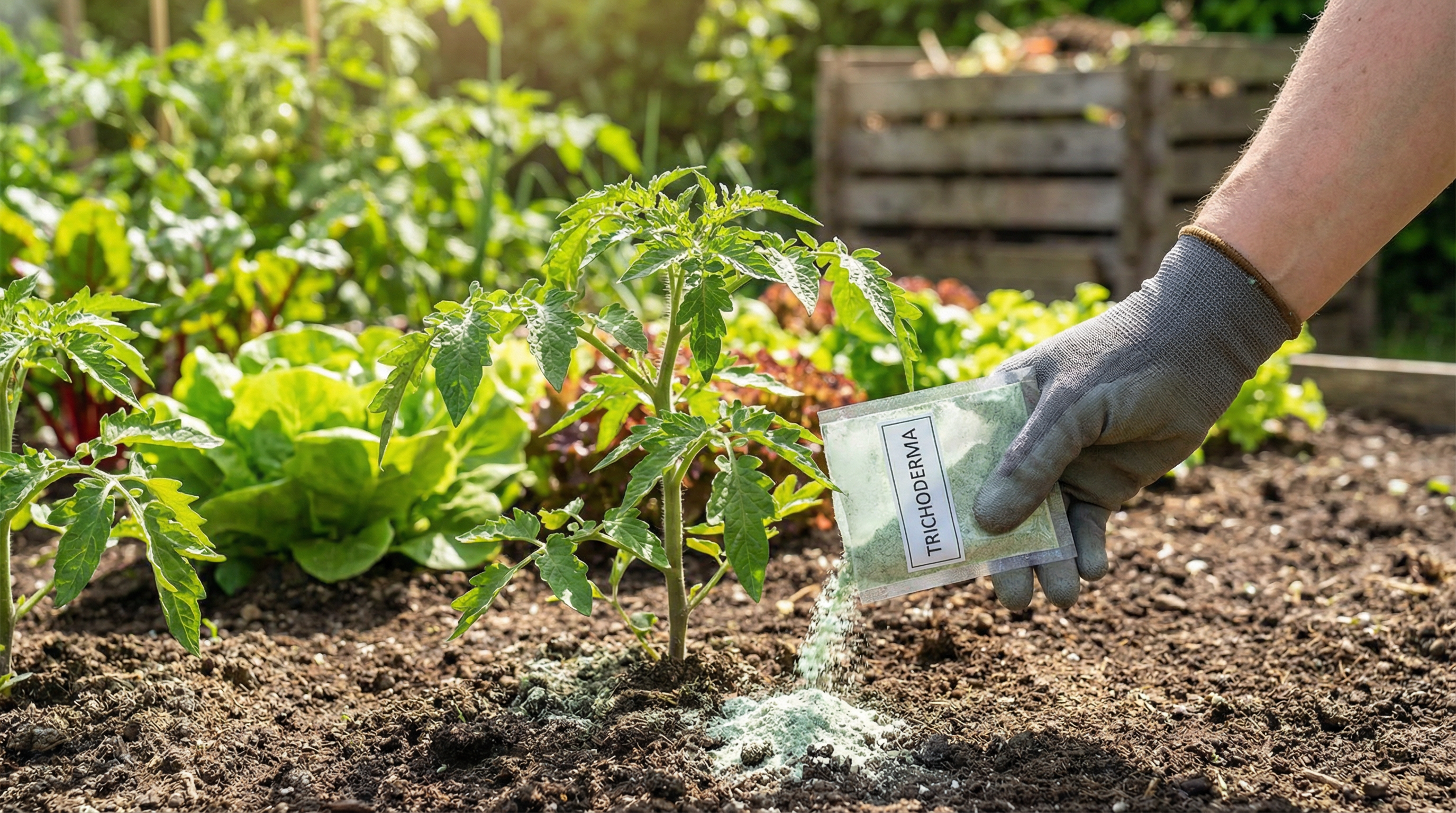
Soil drenching applies Trichoderma directly to the root zone so it can protect any plants from pathogens in the soil and build a more healthy environment in the soil.

Application:
For Garden Plants:
Mix 10g Trichoderma powder, or 10ml liquid in 1 liter water.
Apply directly at the base of the plant.
For Field Crops:
Make a tank mix of 1 kg Trichoderma in 200 liters water.
Apply either in the row, or drip into the soil.
For Sick or Weak Plants:
Repeat drenching every 15–20 days to help recovery.
Ideal For:
- Fruit plants
- Vegetables
- Orchards
- Pots and grow bags
- Lawns
Trichoderma Indicators:
Less problems with soil fungi
Plants are standing much stronger
New root formations much faster
Healthier green growth
Foliar Spray: Best Practices for Application
Soil drenching method applies Trichoderma directly to the root zone, where it protects plants against damaging soil pathogens, while creating a healthier soil ecosystem.
Why it is used:
- Suppresses damaging fungi in the root zone
- Increases root growth and root depth
- Improves soil structure and enhances microflora
- Enhances the effects of Trichoderma to plants for use in farms and gardens
How to apply:
For garden plants:
Mix 10 gm of Tichoderma in 1 liter of water or the liquid equivalent of 10 ml.
Pour at the base of each plant directly.
For field crops:
Prepare a tank mix with 1 kg of Trichoderma in 200 liters of water.
Apply along rows or into the soil by dripping.
For weak or sick plants:
Repeat the drench every 15 - 20 days or more often till plants recover.
Ideal for:
- Fruit plants
- Vegetables
- Orchards
- Pots or grow bags
- Lawns
Signs Trichoderma is working:
- The soil fungal problems magnitude has been decreased - e.g. pathogens, molds, or other issues.
- Plants appear to stand stronger.
- New roots are growing faster.
- Plants are growing in a much more green and healthy manner
Do’s & Don’ts

Choosing the Right Trichoderma Product: What to Look For
Just as different types of millets serve various baby needs, there are Trichoderma products designed to support a specific plant need in either gardening or farming. In determining the correct product type to bring to use, it’s important to consider how each product works, what type of strain it contains, and how well it supports Trichoderma growth in soil.
A good Trichoderma product should:
- Be comprised of a dominant, viable strain with high colony-forming units (CFU)
- Support root health and soil immunity
- Directly mix with soil or water
- Support sustainable plant protection
If you’re thinking to yourself “Is Trichoderma good for plants?” — yes, high-quality Trichoderma products can improve plant vigor, resilience, and nutrient uptake noticeably.
Best Trichoderma Products for Plant Growth
Quality trichoderma products contain viable spores, which will colonize the plant roots while inhibiting the colonization of soil pathogens. Trichoderma products are made to increase trichoderma counts and are effective natural defenses for your garden.
Key Attributes of a Quality Product:
- High numbers of CFUs (1×10⁷ to 1×10⁹)
- Pure spores with no fillers
- Rapid root colonization (the more rapid the better)
- Broad-spectrum antifungal activity
- Applicable to all crops (vegetables to ornamentals)
Good Examples:
Trichoderma harzianum Products
General plant growth and controlling specific plant diseases
Ideal for use on vegetables, fruits, and house plants.
Trichoderma viride Bio Fungicides
Stronger against soil-borne pathogens (wilt, rot, damping off)
Commonly used in nurseries and on farms.
Trichoderma Mixes (multiple strains)
Broader protection
Improved nutrient cycling and fertility.
Why They Work:
- Increase root mass
- Acts as a protection against fungi, Fusarium, Pythium, and Rhizoctonia.
- Improves nitrogen, phosphorus, and micronutrients uptake.
- Improves tolerance to stressors (drought heat and transplant shock).
In summary, a good trichoderma product will ensure rapid root colonization and improve long-term soil health—good reasons to consider Trichoderma for plants, the very best to the gardener
Selecting Effective Trichoderma Strains for Your Garden
Choosing the right Trichoderma strain is as important as choosing the right grain variety to suit the individual's age or need. Each strain has unique benefits. Selecting the right one will provide your plants with maximum protection and growth stimulation.
Most Effective Strains and Their Uses
1. Trichoderma harzianum:
- Good for overall plant health
- Good for root systems
- A better overall nutrient uptake
- Best for home gardening purposes
2. Trichoderma viride:
- Good for protecting plants from soil pathogens
- Good for protecting seedlings from damping-off
- Good for early plant growth in the soil
3. Trichoderma asperellum:
- Good for disease resistance
- Good for stressed plants due to abiotic factors
- Good for fruit plants and flowering plants
4. Trichoderma koningii:
- Good for composting applications
- Good for soil texture
- Good for organic farm applications
How to select the right strain.
- For vegetables. harzianum + viride
- For fruit, asperellum
- For flowering, harzianum
- For diseased soil, viride
- For composting, koningii
Why the strain selection matters?
The right strain relates to:
- Speed of how fast root colonization occurs
- Level of protection from pathogens
- Improvement of soil microbial balance
- Success of trichoderma growth overall
Trichoderma Product Forms: Powder, Liquid, and Granules
Just as baby foods come in different textures for different stages, Trichoderma products also come in various forms—each suited for specific applications.

As giving your baby the right millet is essential for the appropriate baby milestones, using the right Trichoderma product will provide your plants with stronger root growth, improved soil health, and natural disease resistance.
Whether you're using a powder, liquid or granular formulation, Trichoderma will:
- Increase plant resilience and immune system
- Increase nutrient mobility
- Increase soil fertility
Encourage sustainable trichoderma growth
And yes - Trichoderma is genuinely good for plants, meaning it is a great high-quality organic solution for every gardener and farmer.
Troubleshooting and Tips: Maximizing Results With Trichoderma in Your Plants’ Care Routine
Using Trichoderma to promote plant growth, root vigor, and disease protection is one of the best ways to promote organic health for your plants. To achieve your expected results, you must adhere to proper guidelines and avoid the most common mistakes. The following will provide you with the most important troubleshooting guides and practical tips to ensure Trichoderma's vicinities in your soil.
Common Mistakes When Using Trichoderma
Just as infants require the proper nutrition at the proper time for growth and wellness so does Trichoderma require the proper conditions for fungi to grow. You would be amazed at how many missteps there can be in the success of Trichoderma. Here are the most common missteps followed by a suggestion to get back on track:
Misstep 1: Applying a Chemical Fungicide With a Trichoderma Like Organism
Chemical fungicides kill fungi, which will include the beneficial ones as well.
This can be problematic:
They outright kill Trichoderma, and it cannot begin to colonize.
Get back on the right track:
Either do not apply a fungicide for a minimum of days before applying Trichoderma or a minimum of days afterwards.
Misstep 2: Mixing Trichoderma With Hot Water
Hot water kills the beneficial spores.
Get back on the right track:
Use cool water or room temperature to make a soil drench, spray, or activate into compost.
Misstep 3: Apply Trichoderma In Direct, Harsh, Sun
Using harsh sun reduces spore survival.
Get back on the right track:
If possible apply early morning or evening for maximum colonization.
Misstep 4: Applying Too Much Trichoderma
More is not better.
Get back on the right track:
Use the recommended dose: 5–10 g and/or 1–2 g/L for a soil drench application, or 2–4 kg/acre for direct soil application.
Misstep 5: Storing Trichoderma Incorrectly
Heat or sunlight will kill harmful spores.
Get back on the right track:
Store the product in a cool, dry, dark place, preferably in a refrigerator, and not frozen.
Compatibility with Fertilizers and Pesticides

Best Techniques for Safe Use with Other Inputs
1. Have a Gap Between Fertilizers and Trichoderma
Minimum gap time is 48–72 hours
2. Avoid Copper-Based Products
Copper fungicides are death to Trichoderma fungi.
3. Use Organic Inputs Whenever Possible
Organic matter is food for Trichoderma and will cause it to become more plentiful.
4. Always Check pH
Trichoderma prefers a pH of 5.5–7.5
If soils are too acid or too alkaline, performance is reduced.
How to Ensure Effective Colonization by Trichoderma Fungi
For effective colonization of the root zone, plants require the appropriate environment; similar to how infants require appropriate nurturing. Below are the most important actions for colonization:
Step 1 : Moist Soil is Important
Trichoderma colonization needs moist, but not saturated soils.
Tip: Lightly water the soil before and after application.
Step 2 : Provide Organic Matter
Trichoderma thrives on dead organic matter and exudates from roots.
Add: Compost, leaf mold, cow manure, or compost from your kitchen scraps.
This supports a significant increase of Trichoderma.
Step 3: Apply Next to the Root Zone
To maximize colonization:
Seeding treatment provides early protection to roots.
Soil drench introduces to the rhizosphere (root zone).
Root dip also helps nursery plants establish rapidly.
Step 4: Provide Care in Cool Conditions After Application
High heat decimates the spore concentrations. Shelter and nothing else will help retain moisture and temperature.
Step 5: Reapply Every 20–30 days.
Trichoderma is living; it may decrease in proliferation over time.
Reinforcement dose allows for plant protection and long-term health improvements in the soil.
Step 6: Low Density Soil Microbes Negative Competition
If using:
- Yeast
- Heavy bacteria liquids
- Highly concentrated teas
- Final Take Away
When applied according to pre-described expectations, Trichoderma for plants is a potent, natural, and environmentally friendly for plant care. And theses results improve soil health, increase
FAQs
Q1 Is Trichoderma Good for Plants?
Yes, Trichoderma is excellent for plants—it boosts root growth, improves nutrient absorption, and naturally protects plants from harmful soil pathogens.
Q2 How Does Trichoderma Promote Growth in Plants?
It colonizes the root zone, enhances nutrient uptake, stimulates hormones, and improves soil microflora, resulting in faster and stronger plant growth.
Q3 Can Trichoderma Help With Plant Disease Control?
Yes, Trichoderma acts as a natural biocontrol agent by suppressing fungi like Fusarium, Pythium, and Rhizoctonia, preventing root rot and soil-borne diseases.
Q4 How Should I Apply Trichoderma to My Plants?
You can use it as a seed treatment, soil drench, compost enhancer, or root dip—depending on plant stage and requirement.
Q5 Is Trichoderma Safe for Organic Gardening?
Absolutely—Trichoderma is 100% natural, eco-friendly, and approved for organic farming and gardening.
Q6 How Long Does it Take for Trichoderma to Show Results?
Visible improvements usually appear within 7–14 days as root colonization increases and plant stress reduces.
Q7 What Are the Best Trichoderma Products for Plants?
High-quality Trichoderma powder, liquid bio-fungicides, or granules with T. harzianum or T. viride strains work best for home gardens and farms.
Conclusion: Embrace Trichoderma—A Game-Changer for Healthy and Thriving Plants
Trichoderma has rapidly grown into one of the most reliable natural products for modern law care and sustainable agriculture, and for good reason. Trichoderma acts as a powerful beneficial fungus, which helps strengthen root systems, absorb nutrients, and protect crops from common soil-borne diseases. Trichoderma provides the backbone for a more healthful and resilient garden appeal—whether it’s vegetables, flowering plants, fruit trees, and indoor greens
Many gardeners still inquire, is Trichoderma good for plants? Yes, it absolutely is. Unlike chemical fungicides, Trichoderma works alongside the plant rather than in opposition to nature. It creates long-term immunity, improves soil structure, and helps foster a microbial habitat around the roots to promote a coactive beneficial ecosystem, which essentially means the plant not only survives, but thrives when monitoring issues such as drought stress, lack of nutrients, or pathogen attacks.
Another very impactful benefit is that Trichoderma will help support the continuous growth of Trichoderma in the soil. Similar to how it can be a solution for poor or degraded soil, when Trichoderma is introduced into the soil and reflected in a new garden, the Trichoderma should establish in the soil, and multiply naturally to provide a longer period of protection and improved root architecture of our beneficial plants. The existing structure to sustain continued Trichoderma growth in the soil is very attractive for anyone looking for sustainable plant and garden care without relying on chemical assistance.
When you use Trichoderma, the appeal is improved for a greener, safer, and more sustainable gardening practice or lifestyle. Regardless if you're gardening for the home, or vegetables, it is a great way to manage a natural material to improve root systems and the long term goals to sustainability.