

Understanding the Different Types of Amino Acids in Agriculture
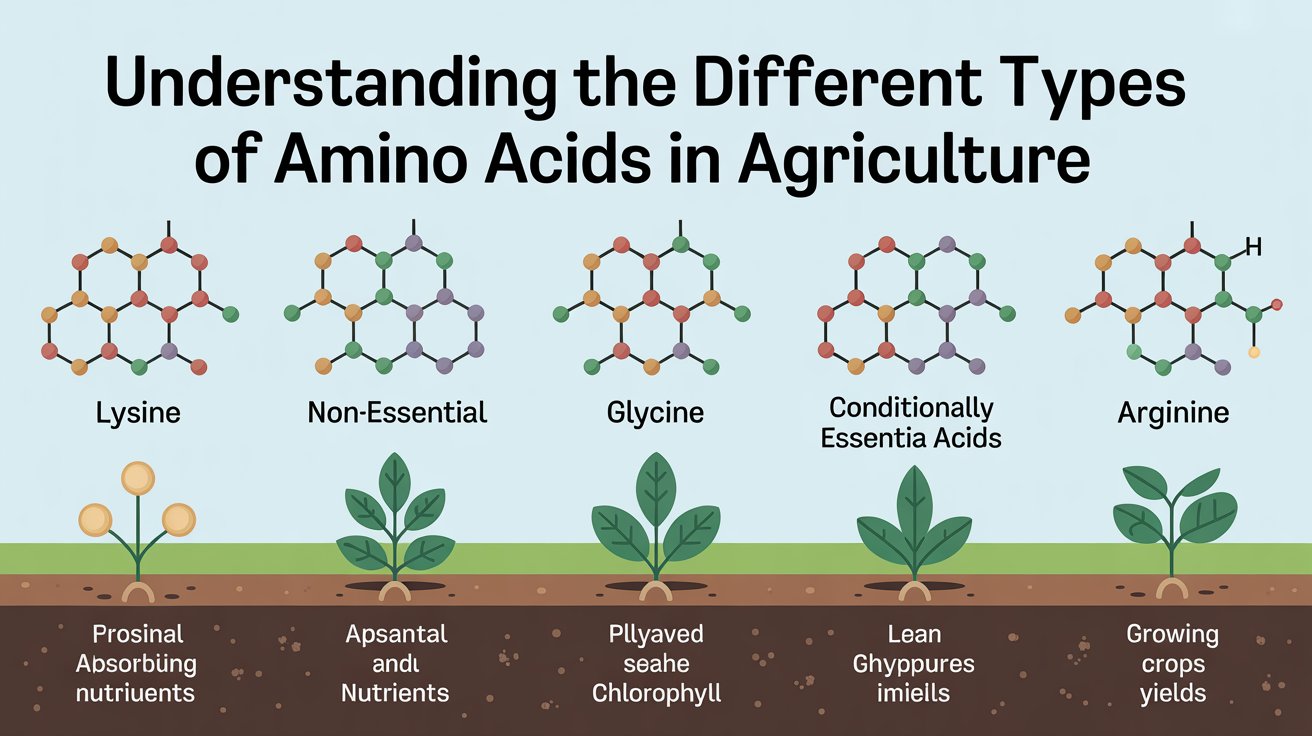
Amino acids are gaining recognition in agriculture as critical bioactive substances that support: plant growth, soil health, and resistance to environmental stress. For nutrients to work well for farmers, farmers must understand the types of amino acids and how each amino acid operates in the agricultural system. Essentially, amino acids in agriculture can be grouped into three major amino acid categories: essential, non-essential, and conditional. Each group has a role depending on the crop's growth stage and the external environment.
Essential amino acids are those that lack internal production by the plant, requiring amino acids to be administered externally via bio-stimulants and/or amino acid based fertilizers-amino acids specifically required for the crucial flowering, fruiting, or recovery from nutrient deficiency stages. Non-essential amino acids can be produced internally; however, the applications can improve the metabolic efficiency of the plant, enzymatic activity, and chlorophyll development and retention in the live leaf plants. Finally, conditional amino acids will become essential under stressful conditions, such as drought, salinity, or excessive heat, because the internal production of these amino acids will not be adequate to support the physiological demands of the plant.
Implementing all forms of amino acids into cultural practice offers the farmer healthy growth cycles, potent root systems, improved nutrient absorption, and higher consistency of yield. Gaining a complete understanding of the different classifications of amino acids allows the grower to take a sharper and focused approach, enabling amino acids to be more than an additive. Rather, amino acids become a cornerstone of sustainable agriculture.
Introduction: Why Amino Acids Matter in Farming
As the practice of agriculture continues to evolve, we develop from simply feeding crops to truly nourishing them. One of the many innovations to recognize is the role of amino acids as natural partners in supporting plant health, enhancing soil health, and managing crop stress. Both farmers and academic researchers now view understanding agricultural amino acids as a vital component of knowledge in adopting increasingly sustainable and productive practices.
The Growing Role of Amino Acids in Modern Agriculture
Ten years ago, amino acids were seldom mentioned, except for human nutrition or livestock feed. Today, amino acids are becoming a staple in crop input programs across the globe.
What has changed?
- Plant biochemistry education: With the advancements of science related to plant health, farmers now understand how amino acids relate to essential plant activities like enzyme activation, hormone production, and chlorophyll synthesis.
- Demand for natural products: Chemical overuse and degraded soils have left farmers looking for biodegradable, non-toxic plant growth solutions without harming the environment. Amino acids fit this description.
- Adoption of precision agriculture: Agriculture is increasingly powered by precision inputs. Generally knowing all types and how each type relates to certain physiological processes makes farming more targeted and efficient.
At the moment, amino acids are not considered an option. They are part of a balanced and bio based nutrition program.
Why Farmers Are Turning to Amino Acids
For farmers, success is ultimately about finding the right balance between input costs, yields, and maintaining long-term soil health. Amino acids provide benefits on all three counts, which is why there has been an increase in growers including them in their crop schedules.
Here’s why this is the case.
- Versatility: Regardless of how they are used—as a foliar spray, as root drenches, or as a seed coating—amino acids will be beneficial in a wide variety of crop and growing situations.
- Complementary with other agri-inputs: Amino acids work well with fertilization, they will improve micronutrient uptake, and they can be used with organic acids, such as humic and fulvic acids, to achieve an overall improved planting season.
- Stress alleviation: Some categories of amino acids, namely conditional amino acids, play a major role in helping plants acclimate and face drought, salinity, and temperature stress, all of which are prevalent challenges due to climate change variables.
Farmers are realizing that every sort of amino acid, whether essential, non-essential or conditional, helps to achieve more uniform plants, improved root establishment, better flowering, and better quality.
Understanding Plant Nutrition at the Molecular Level
To truly appreciate the importance of amino acids in agriculture, it is critical to understand their function at the cellular level. Amino acids are the smallest units of proteins, and proteins are necessary for almost every biological activity in a plant.
Let’s break down their molecular-level impact:

This is why it is important to know the types of amino acids—each one initiates or helps a different activity. For example:
- Essential amino acids, which must be supplied from the outside, are critical during flowering or fruit set.
- Non-essential amino acids, which are produced from the plant, may need support during rapid growth phases.
- Conditional amino acids, which are produced from the plant but are required in higher quantities during times of environmental stress like drought or heat.
By using amino acids to support a plant, the farmer will be providing support in the exact place, and time, the plant needs support the most—from the cellular level.
What Are Amino Acids and How Do They Support Plants?
Amino acids are the building blocks of proteins and are a necessary component of plant growth and health in agriculture. Amino acids are not just nutrients, they act as biostimulants, stress protectants, and natural chelators as well. With their use, either in a foliar spray or added to soil, amino acids can assist a wide variety of processes, such as promoting root growth, flowering, and fruit setting.
When discussing plant nutrition, awareness of the type of amino acids being used is important. Amino acids can be classified into three groups:

All three of these classes of amino acids can have a role towards better crop development and ultimately some increased quality and yield potential of a crop, when used in a balanced way on all crop types.
Basic Structure and Function of Amino Acids in Plants
At the molecular level, amino acids consist of an amine group (-NH₂), a carboxyl group (-COOH), and a unique side chain. This structure allows them to perform various functions inside plant cells.

These properties make amino acids incredibly versatile. Within the plant, they:
- Build proteins and enzymes.
- Precursor for plant hormones and growth regulators.
- Play a role in photosynthesis, respiration, and nutrient translocation.
By recognizing these categories of amino acids, farmers are better equipped to understand what product to use and when to apply it.
How Amino Acids Interact with Soil and Roots
Amino acids are beneficial to plants, but they also greatly enhance soil biology. When applied to soil, amino acids may:
- Stimulate beneficial microbial activity – Feeding beneficial bacteria and fungi that support soil improvement.
- Act as chelating agents – Aiding in binding nutrients like calcium, iron, and magnesium while making them more bioavailable to the roots.
- Enhance root uptake – Helping nutrients move into the root zone.
Here’s how amino acids function at the root-soil interface:

Using all types of amino acids—especially those that interact strongly with soil microbiota—results in healthier root zones and more efficient fertilizer use.
Benefits for Crop Growth and Stress Resistance
Amino acids have an especially high value under conditions of environmental stress. These include drought, severe heat, salinity, or transplant shock, the correct type of amino acids can help your crops recover more quickly and help the crop perform better.
A few key benefits include:
- Enhanced chlorophyll synthesis resulting in improved photosynthesis
- Encouragement of strong root systems allowing for better water and nutrient uptake
- Greater and faster recovery from abiotic stress such as drought or heat stresses
- Enhanced immunity through the synthesis of defense proteins
Some amino acid categories (for example, conditional amino acids such as Proline) are known for their beneficial role in osmotic regulation by helping plants retain water during dry cycles. Essential amino acids (such as Lysine and Methionine) are critical for the metabolic activity of plants and non-essential amino acids like Glutamic Acid support nitrogen metabolism and promote plant growth.
Essential Amino Acids: The Ones Plants Can’t Make

What Makes an Amino Acid "Essential" in Agriculture?
In simple terms, an amino acid is considered "essential" if the plant cannot synthesize it at all, or cannot synthesize it in sufficient quantities for the demands of development. Some amino acids are only essential under certain environmental conditions, but many are essential throughout all stages of the crop's life cycle.
Here is the information about what describes the "essential" term in plants:
- Absence of biosynthetic pathways in the plant
- High demand during certain growth stages, such as flowering
- Increased demand under stress conditions, such as drought or nutrient limitations
By providing these amino acids to the plant as a foliar spray or soil application, farmers can overcome natural limits and enable the plant to perform at its highest potential.
Common Essential Amino Acids Used in Fertilizers
A variety of essential amino acids are now included in agricultural input formulations, especially those aimed at boosting productivity and resilience. Below is a breakdown of some commonly used essential amino acids and their functions:

These amino acids are often found in advanced biostimulants or amino acid fertilizers, formulated to address growth bottlenecks and promote uniform development across the field.
Role in Flowering, Fruit Set, and Yield Development
All the kinds of amino acids, essential amino acids, have the greatest impact during the reproductive stages of plant growth. Here's how:
- Flowering: Amino acids such as Methionine help to complex hormonal balance in flowering, both initiating and developing in flowers.
- Fruit Set: Amino acids promote nutrient flow to the developing fruit and prevent flower drop, and promote fruit set.
- Yield Quality: Essential amino acids contribute directly to quality by supporting protein synthesis as well as energy metabolism, which will have direct implications on the size, color, and nutritional value of the harvested product.

Farmers that apply those categories of amino acids correctly and at the right time, often experience more consistent flowering, higher fruit set percentages, and improvements to crop quality, especially in high value fruit, vegetable and oilseed production.
Non-Essential Amino Acids: Internal Plant Builders
While essential amino acids must be obtained from external sources, non-essential amino acids are materials that plants can produce on their own. However, even though they are called "non-essential," it does not mean they aren't important. Non-essential amino acids are vital for nearly every internally driven response from energy production to protein building. They act as the 'building crew' in the plant system building the biochemical foundation necessary for crops to be healthy and productive.
In the broader context of different types of amino acids used in agriculture, non-essential amino acids are there to aid and provide support, albeit a strong support. Non-essential amino acids are naturally present in most plant systems, and yet sacrificial modern day agricultural production would suggest that the growing conditions (e.g., environmental stress, poor soil quality, etc.) might have used up the non-essential amino acid presence. That really is part of the bigger picture as to why it has become common, and beneficial, to supplement every type of amino acid, including non-essential amino acids, in agriculture.
What Are Non-Essential Amino Acids in Plants?
Non-essential amino acids are amino acids that a plant can build from other organic compounds during its standard metabolic process. Non-essential amino acids function in supporting the fundamental physiological and structural development of the plant.
Some examples of non-essential amino acids present in plants include:
- Glutamic Acid - An essential component of nitrogen assimilation
- Aspartic Acid - Involved in energy transfers and synthesis reactions with other amino acids
- Alanine - Involved in trafficking nitrogen throughout the plant
- Serine - Involved in cell division and DNA synthesis

Although these are part of the plant’s internal amino acid categories, external supplementation can boost their levels during high-demand periods such as rapid growth or transplanting.
Key Functions in Photosynthesis and Enzyme Activity
Out of all the amino acid types, the non-essential group is particularly critical in photosynthesis and enzymatic activity.
Steps involved in these processes:
- Chlorophyll Model: Amino acids such as Glutamic Acid, which is very important for chlorophyll production, is very important for the plant as chlorophyll is responsible for capturing sunlight or sub ultra-Violet and converting this to energy.
- Enzyme Activity: A large number of the non-essential amino acids serve as precursors or cofactors for many enzymes that regulate key metabolic pathways.
- Energy Transfer: Compounds such as Aspartic Acid are constituents of the citric acid cycle, which is central to energy production.

By ensuring a steady supply of these amino acid categories, farmers can enhance the core biological processes that drive plant performance from seed to harvest.
Benefits of Supplementing Even If Plants Make Them
One common question is: If plants manufacture non-essential amino acids if they don't need them, why would we supplement them? The answer is in demand vs. supply. Under normal conditions they do synthesize enough. When plants are under stress or when they are at peak growth, the internal production of non-essential amino acids may be out-paced by demand.
Why should we supplement non-essential amino acids?
- Enhance Growth Rates: When plants are growing rapidly, they will need more amino acids than they are able to synthesize for themselves.
- Aid in Recovery from Stress: Internal productivity of amino acids may be reduced during stress. Drought, salinity, or temperature extremes may all diminish the plant's internal productivity of amino acids. Supplementing during these stressful times may help the plant recover quicker from stress and resume normal growth.
- Increase Fertilizer Recovery: In situations where amino acids are applied with traditional fertilizers, amino acids can extract more of the fertilizer applied and increase recovery via uptake while reducing leaching.

So, even though non-essential amino acids are internally produced, supplementing them offers a strategic advantage—especially when aiming for high-efficiency, high-output farming.
Conditional Amino Acids: Vital in Stress Conditions
Plants often endure environmental constraints, such as drought, high heat, or high salinity, in production agriculture. These situations disrupt normal growth and metabolic processes. During those times, conditional amino acids become very important, despite the plants' ability to manufacture amino acids in normal situations. Even under stress we experience, internal plant levels of amino acids frequently do not reach levels needed for full internal metabolism. At those times amino acid supplementation can be critical.
Of the various types of amino acids used in agriculture, conditional amino acids fulfill an important role. Conditional amino acids serve as the link between the internal processes of the plant, and the outside demands of climate and environmental impact, hence they are critically important during important recovery periods. Responsible farmers today are aware that all types of amino acids, conditional included, are used today in their crop management programs in order to assist the plants when they encounter the drying stress or maybe high salinity, or high heat, or all at once.
What Are Conditional Amino Acids in Crops?
Conditional amino acids are not always required in high amounts, but they can become essential during stress situations. They are different from essential amino acids (must be supplied from the outside, always) or non-essential amino acids (which can be synthesized by the organism).
Conditional amino acids are only needed in increased quantities under specific conditions such as:
- Drought or water stress
- Soil salinity
- Heat or cold events
- Transplant shock
- Pesticide or chemical exposure
Some key examples of conditional amino acids in agriculture include:

These amino acids fall into unique amino acid categories that come into play only when the plant's environment becomes hostile.
When Plants Need More: Drought, Salinity & Heat
Environmental stress affects crop physiology at all levels---from root water uptake to enzyme activity. In this situation, a plant's capacity to produce even non-essential amino acids has been considerably reduced. Conditional amino acids compensate for that deficit by:
- Maintaining cellular hydration,
- Protecting plant proteins from degradation,
- Stabilizing membranes and enzymes, and,
- Improving antioxidant capacity.

This is why applying all types of amino acids, especially the conditional ones, during unpredictable weather events or mechanical stress (e.g. pruning or transplanting) can save the crop from yield loss.
How Conditional Amino Acids Aid in Recovery
Amino acids that are classified as conditional are important not only during a period of stress but also after the stress has been resolved. They:
1. Rebuild damaged tissues and restore metabolic repair
2. Reactivate nutrient transport systems and enzymes
3. Support chlorophyll regeneration and contribute to photosynthetic activity
4. Help promote root regrowth and shoot development
For example, Proline is not just a drought protectant, but it actively assists with recovery by stabilizing the photosynthetic apparatus. Arginine helps mobilize nitrogen and create new tissues, and Cysteine assists in the detoxification of residual salts or heavy metals.

By integrating conditional amino acids into a stress management strategy, farmers can enhance not just survival, but full recovery and optimal yield even after tough growing conditions.
How to Source Amino Acids for Agricultural Use
Understanding the sourcing and application of amino acids when deciding to add them into your crop nutrition plan is key. Not all amino acid products are the same and knowing the source, form, and application period will each influence how well they work on your farm. Regardless if you are growing cereals, fruits, vegetables, or pulses, selecting the best types of amino acids will help with absorption and contribute to healthier plants and yields.
In the current marketplace, there is a variety of amino acid-based agri-inputs to choose from. The challenge is knowing the amino acid categories, the form of the product, and matching them to crop type, stage of growth, and stress level. This document will help with that.
Natural vs Synthetic: Which Is Better?
Amino acids used in agriculture are primarily derived from two sources — natural (organic) and synthetic (chemical). Both can be effective, but their benefits, compatibility, and cost differ. Here’s how they compare:

Natural amino acids are ideal for organic farming systems and long-term soil health. Synthetic variants are often preferred in high-efficiency fertigation or large-scale operations due to cost and consistency.
Whichever you choose, ensure it provides all types of amino acids, including essential, non-essential, and conditional types—especially if you’re dealing with multiple crop stages or variable stress conditions.
Forms Available: Liquid, Powder, and Granules
After you have chosen your source, the next thing to consider is how the amino acids are offered.
The major commercial forms are:
- Liquid Amino Acids
- Excellent for foliar sprays and fertigation
- Provides quick reaction and fast results
- Easy to mix with other inputs
- Powdered Amino Acids
Ideal for bulk application or mixing into a formulation
- Stable storage and handling
- Easily made to be crop-specific
- Granular Amino Acids
Typically done to soil conditioning for slow-release
- Applied at planting or transplanting
- Most suitable for adding longevity to soil health

Choosing the right form is very similar in importance to choosing the right categories of amino acids. A quick-response crop like leafy greens might be better suited to foliar liquids, while a root crop or orchard will typically respond best to powder or granule types based in soil applications.
Choosing Products Based on Crop Type and Timing
Not all crops require the same amino acid composition or delivery method. Different growth stages also demand different types of amino acids. That’s why choosing the right product involves more than just reading the label.
Here’s how to match amino acid types to your crop needs:

Key tips:
- Always align the amino acid categories to crop stress levels and growth phase
- For stressed or poor soils, include all types of amino acids—especially conditional types
- Check for certified sources if practicing organic farming
Application Strategies for Maximum Effectiveness
In order to optimize the potential of amino acids in agriculture, application techniques should align with the growth stage, stress condition and nutrient requirements of the crop. No matter the goal - germination, flowering or yield quality - knowing the best method and types of amino acids to employ is important.
Agriculture today is focused on efficiency and sustainability, which is why understanding the strategic use of all types of amino acids is valuable. Essential, non-essential or conditional amino acids have unique effects based on the method of delivery used to provide amino acids to the plant. Below are three popular techniques that farmers and agronomists utilize to maximize amino acid applications.
Foliar Feeding: Quick Uptake Through Leaves
With foliar application, you actually spray amino acid solutions onto the leaves of the plant. This is advantageous because the amino acids get absorbed into the plant's vascular system quickly, without being taken up from soil.
Foliar applications can be useful during
- Early vegetative growth,
- Flowering and fruit set, and
- Environmental stress (drought, heat, salinity).
Why would one use foliar feeding?
- It provides a quick way to get nutrients to the plant, which is beneficial for a quick recovery.
- It reduces nutrient loss compared to applying inputs to the soil.
It can often be applied with other inputs, such as micronutrients and biostimulants.

Best suited for: Essential amino acids like Methionine, Lysine, and Threonine—especially during flowering and fruiting.
Soil Application for Long-Term Soil Health
Adding amino acids to the soil—through fertigation or drenching—is the best way to improve rhizosphere health and provide long-term nutrient availability. Soil applications feed the plant and the soil microbiome, unlike foliar feeding.
Advantages of soil application:
- Enhances microbial activity – amino acids are carbon/nitrogen sources for beneficial bacteria
- Enhances root development – under poor or stressed conditions of soil
- Increases soil nutrient hold – increasing fertilizer efficiencyBest suited for:

Non-essential amino acids like Glutamic acid, Alanine, and conditional amino acids such as Proline during drought recovery.
Seed Treatment and Early Growth Stage Use
Having seeds treated with amino acids prior to planting can benefit crops by enhancing germination rates, promoting early root development, and increasing resistance to diseases. It is an inexpensive process and is effective in both large-scale producer and nursery settings.
It works:
- Seeds are treated by coating or soaking them in a dilute amino acid solution
- The treatment stimulates internal enzymes and enhances nutrient mobility
- Stronger seedlings lead to improved establishment of stands of plants

Best suited for: A combination of all types of amino acids, especially non-essential and conditional categories for early plant strength.
FAQs
Q1. What are amino acids and how do they help crops?
Amino acids are natural growth promoters which support crop metabolism, nutrient uptake and stress tolerances.
Q2. What’s the difference between essential and non-essential amino acids in plants?
Essential amino acids have to be supplied externally, whereas non-essential amino acids are made by the plant itself.
Q3. Can amino acids help crops during drought or heat stress?
Yes, conditional amino acids can increase plant tolerances to stress conditions and help them recover faster once under stress.
Q4. Are amino acid products suitable for organic farming?
There are many amino acid products produced from naturally occurring sources with a place in organic and sustainable farming practices.
Q5. How often should amino acids be applied to crops?
Application rate is dependent on crop type and growth stage, however, utilizing all forms of amino acids on a 10–15 day re-application is best.
Conclusion: Embrace the Power of Amino Acids in Farming
In the continually changing environment of modern farming, utilizing the benefits of amino acids is now a smart and sustainable necessity rather than a choice. Amino acids are natural compounds that are the foundation of growth, nutrition, and resilience in plants. They provide an extensive range of agronomic benefits, such as improving nutrient uptake, increasing photosynthesis, enhancing root development, or improving plant tolerance to biotic and abiotic stress.
By gaining knowledge, and using the proper types of amino acids—whether essential, non-essential, or conditional—an innovative farmer can change their crop management strategies to each stage of growth and environmental conditions. Incorporating all forms of amino acids into a sound crop nutrition program promotes a proper level of support tailored to the physiology of the plant.
Taking into account the correct amino acid category based on crop type, timing, and application (foliar, soil, or seed) has the potential to enhance crop value, reduce chemical reliance, and improve long-term soil health. In summary, amino acids are more than supplements; they are natural seductive tools that achieve economically and environmentally sound farming. Today, more than ever, it is important to implement amino acids as a matter of course on your farm.