

Unlocking Higher Yields: The Power of Humic Acid for Corn Growth
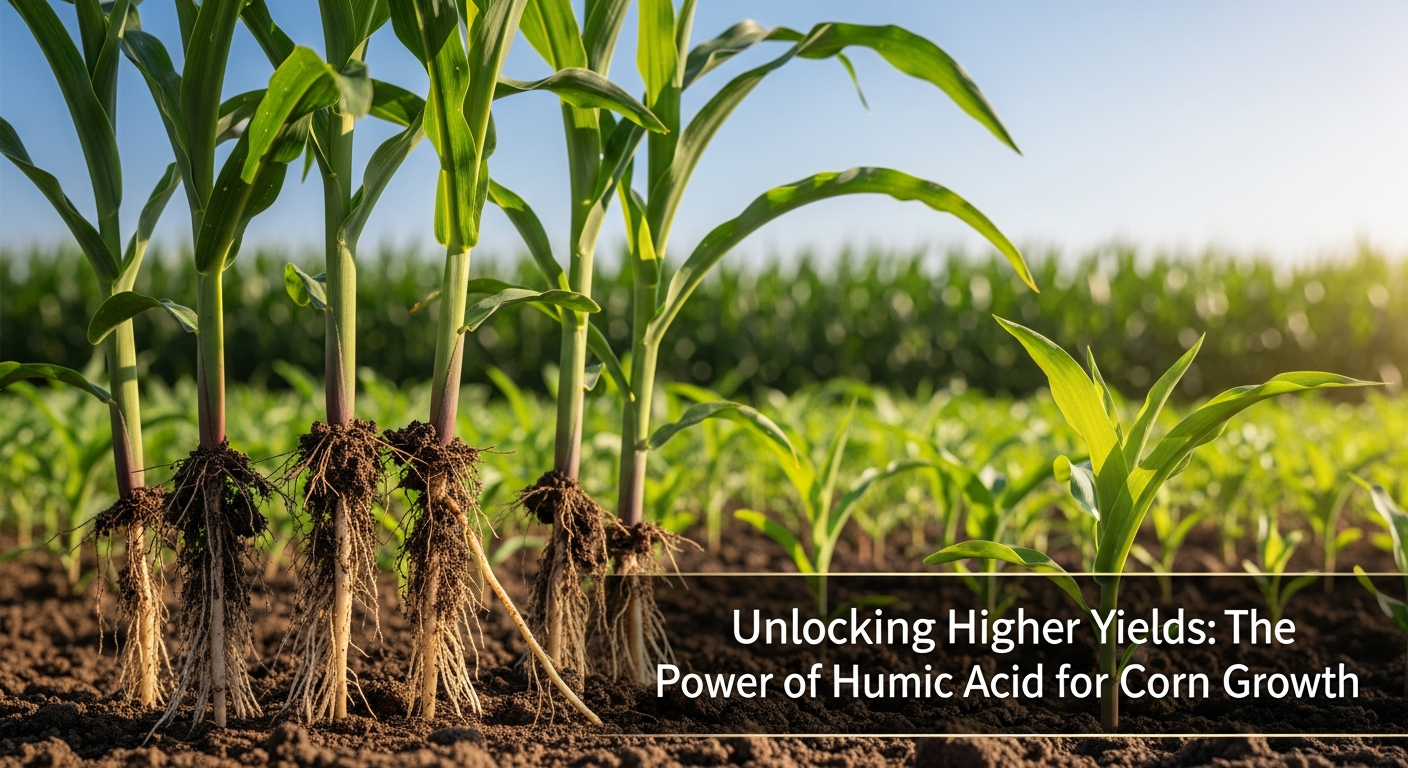
Humic acid is a naturally occurring, organic field enhancer that is produced by breaking down ancient plant material, and has served farmers for decades as an important part of the fertility of soil. Humic acid is composed of carbon, minerals, and bioactive compounds that work like a natural soil conditioner—invigorating the root zone and enhancing plant performance. Humic acid can be used as a fertilizer that improves nutrient access, root density, and water retention—all of which are critical for modern corn production.
Since corn is a nutrient-dense crop, it requires the correct environment to obtain maximum growth and yield. This is where humic acid for corn is a real market saver. The humic acid improves soil structure, enhances the microbial populations, and helps to draw nutrients from the soil that are unavailable to the plants. Each time a field receives a dose of humic acid, from vigorous seedlings to strong stalks and fuller ears, the corn receives layers of health and productivity. With Humic acid, every acre is loaded with natural growth-enhancement for higher yields and health in the field.
Understanding Humic Acid and Its Role in Corn Cultivation
Humic acid is an organic compound that is formed naturally from the breakdown of ancient plants and microbes. Similar to how millets deliver vital nutrients to babies, humic acid for corn serves to deliver necessary nutrients for soil, roots, and crop growth. Humic acid contains carbon, minerals, and bioactive components that help ensure strong growth every growing stage of the corn plant. Humic acid fertilizer, considered a natural soil conditioner, can improve soil structure, promote nutrient uptake, and enhance plant strength. For farmers seeking healthy crops with great yield, this is also an essential input.
What is Humic Acid and Why is it Important for Corn Farming?
Humic acid is a key component of soil organic matter that can yield performance for corn. Similar to Ragi supporting baby’s developing bones and supporting digestion, humic acid supports corn in developing root systems to effectively uptake nutrients and produce a stronger stalk.
Major Benefits
- Boosts Soil Fertility: Increases the organic carbon, improves the buffering capacity of the soil, and improves the rhizosphere.
- Improved Nutrient Availability: Contributes to the formation of conditions in the soil to store nutrients trapped in the soils such as phosphorus, sulfur and micronutrients.
- Enhanced Water Holding Ability: Improves the soil’s ability to hold water, which is a benefit especially in regions where water may be limited.
- Increased Stress Tolerance: Improves plant health under heat stress, drought stress, nutrient (fertility) stress and disease stress.
Humic acid functions much like a natural growth enhancer for corn farm. It increases the physical capacity of the soil to hold nutrients and moisture, making them available to a corn's root systems for nutrients required for optimal plant health. Farmers using humic acid for corn typically see brighter plant coloration, stiffer stalks, and improvement of grain formation. A grown corn uses nutrients at a very high rate, and humic acid provides its full value as an enhanced entry for additional fertilizers for use and limits loss of fertilizers through leaching or fixation of the soil.
The Role of Humic Substances in Improving Soil Quality for Corn
Just like every millet has a different benefit for a baby’s digestion and growth, humic substances have specific roles to improve soil quality for corn. Humic substances consist of humic acid, fulvic acid and humin, which in combination are valuable to soil regeneration.
How Humic Substances Enhance Soil
- Enhance Soil Structure: Contribute to crumb-like soil aggregates which result in good aeration and root penetration.
- Stimulate Beneficial Microbial Activity: Support beneficial microbes that help decompose organic matter.
- Increase Cation Exchange Capacity (CEC): Increase soil retention of nutrients, over longer periods of time.
- Decrease Soil Compaction: Allow dense soils to decompact, enabling roots to easily penetrate.
Humic substances ultimately function uniformly like a "nutrient bridge". Humic substances will bind to clay particles, and mineral particles, which prevent leaching of nutrients and ensure those nutrients are available to corn throughout the growing season. The result is enhanced fertilizer efficiency and healthy soils year after year. With regular inputs of humic acid fertilizer to otherwise poor and depleted soils on a long enough timeline, the effects will create rich productive fields capable of supporting corn with higher yields.

How Humic Acid Fertilizer Enhances Corn Root Development and Nutrient Uptake
Similar to the metaphor of the “7 Types of Millets for Babies,” in this article we will break down humic acid as one of the amendments available to boost root systems. Just as some millets are supportive to brain development or boosted immune systems while in infants, humic acid specifically boosts the corn root systems, which are the foundation of plant strength and yield potential.
Main Root Development Benefits
- Stimulates early root growth: This benefit will lead to a longer and denser root system.
- Improves root branching: This benefit will support root spreading deeper and wider.
- Improves nutrient uptake efficiency: This benefit will make the NPK and micronutrients more accessible.
- Decreases root stress: This benefit will support the root system during drought or nutrient deficiencies.
When farmers apply humic acid fertilizer they will notice corn roots seem to be growing more productively and deeper which enables the plants to absorb more nutrients and water. This will help establishment of the crop faster, allows a grower less chance of causing lodging problems and improving grain filling. The fact humic acid can enhance nutrient use efficiency, protect against phosphorus fixation, and maximize micronutrients like zinc, iron, and manganese all through the medium of chelation are all factors that humic acid can enable for better root systems.
Here Are the Ways Humic Acid Enhances Nutrient Uptake:
- Converts unavailable nutrients to plant-available forms
- Increases permeability of root cell membrane
- Enhances microbial processes that release nutrients.
- Supports enzymes needed to allow for plant growth
- Summary of Mismatched Content Style
The Science Behind Humic Acid: How It Enhances Corn Plant Health
Humic acid is like a natural energy booster for soil, much like millets are a powerhouse of nutrition for infants. Humic acid for corn will improve soil texture, stimulate root systems, improve nutrient uptake, and provide overall resilience for the plant when applied to the field. These benefits are a few most important reasons to use humic materials to get healthier crops and more consistent yields.
The following summarizes how humic acid will enhance corn growth in definitive terms, like the unique value of each millet prepares their role for a different life stage for infants.
Soil Structure Improvement: The Key to Better Corn Yields
Key Points
- Loosens compacted soils
- Increases water holding capacity
- Increase access to aeration around corn roots
- Helps to form a darker, richer, and crumb-like soil texture
Similar to how Finger Millet helps babies build strong bones, humic acid fertilizer helps builds stronger soil profiles. Humic acid causes binding between soil particles to create stable aggregates - making the soil softer, richer, and more penetrable to corn roots. In turn, this better soil structure will retain moisture for a longer time, resist erosion and allow for better airflow to maintain healthy roots.
Compared to corn plants grown in untreated soils, corn plants grown in soils treated with humic acid, typically develop a stronger stalk and more ideal uniform canopy as root systems are able to spread and maximize moisture uptake.

Boosting Nutrient Uptake in Corn with Humic Acid
Key Highlights
- Increases availability of N, P, K
- Unlocks nutrients into forms available for plant uptake
- Increases the surface area of root hairs and root mass
- Acts as a natural chelator
Just as Pearl Millet increases iron in babies, humic acid for corn promotes nutrient delivery. Humic acid binds with nutrients such as nitrogen, phosphorus, and potassium, keeping them from being leached away, and allows for the nutrients to be more available to the roots of plants.
Humic acid also stimulates fine root hairs and increases the surface area of roots to allow corn plants to take up more nutrients per day. This results in more robust vegetative growth, greener leaves, and improved cob formation. Farmers will often notice that they are using less fertilizer because humic acid fertilizer makes the existing nutrients much more usable.
Stimulation of Microbial Activity and Stress Resistance in Corn
Main Points
- Stimulates the beneficial microorganisms
- Increases resistance to drought, salinity and heat
- Builds the plant’s natural immune system
- Decreases stress-associated stunted growth
Just as Barnyard Millet is a good food for babies with sensitive digestive systems, humic acid is beneficial to soil as it enhances the “digestive system” of the soil by enhancing beneficial microbes. The activity of these microorganisms leads to the breakdown of organic matter, nutrient release, and the generation of natural compounds that further enhance the health and strength of corn plants.
Humic acid also improves the corn plant's tolerance under stressful conditions, be it heat, drought, waterlogging, or salinity. Corn plants supplied with humic acid fertilizer will develop thicker cell walls, tougher leaves, and stronger roots that enable the plant to rapidly recover and continue to grow under adverse environmental conditions. This improves yield stability from one growing season to the next.

Proven Benefits of Using Humic Acid for Corn Yields and Quality
Humic acid is a powerful natural soil conditioner that increases nutrient uptake and improves root development and soil health. Used as a humus fertilizer, humic acid helps corn become stronger, healthier, and more resilient. The advantages of using humic acid for corn include increased yields and improved grain quality, which all help create a sustainable and profitable farm operation.
Increased Corn Yields with Humic Acid Application
One of the greatest benefits of humic acid is that it can significantly reduce the use of heavy chemical fertilizers. Farmers who have used humic acid for corn often report a reduction in NPK from 15–30% while not decreasing yield, and often increasing yield.
Sustainability Benefits (so-called Points):
- Reduces the potential for leaching fertilizer into groundwater.
- Increases fertilizer efficiency - "more crop per drop".
- Reduces soil compaction and improves soil biology.
- Assists with long-term soil fertility.
- Reduces overall cost of farming, over time.
The humic acid compounds bind to nutrients in the soil, which prevents nutrients from washing away during irrigation events or rainfall. This can result in improved fertilizer efficiency, and increased time in saving nutrients available to plants. In improving soil structure and reducing heavy fertilizers, humic acid compounds create healthier ecosystems, assists that lessen farmer's production costs, and encourage farmers to move toward more sustainable farming systems.
Enhanced Grain Quality Through Humic Acid Fertilizer
Corn plants receiving beneficial humic acid fertilizer exhibit significant improvement in grain size, weight, and nutritional quality. Humic acid increases nutrient availability so that grains can fill out more uniformly—and achieve increased test weight that impacts market value.
Key Improvements (Points) in Grain Quality:
- Greater grain weight and density
- Improved uniformity of kernels
- Higher starch & protein levels
- Better cob filling and tip coverage
- Reduced grain shrinkage during drying
Humic acid fertilizer improves nutrient mobility within the plant, which enhances the grain-filling period—a dynamic that produces a fuller and more nutrient-rich kernel. In addition, humic acid assists in the mobility of micronutrients such as zinc, iron, and magnesium which directly impact kernel formation.
Sustainable Farming with Humic Acid: Reducing Chemical Fertilizer Dependence
One of the greatest benefits of humic acid is that it can significantly reduce the use of heavy chemical fertilizers. Farmers who have used humic acid for corn often report a reduction in NPK from 15–30% while not decreasing yield, and often increasing yield.

The humic acid compounds bind to nutrients in the soil, which prevents nutrients from washing away during irrigation events or rainfall. This can result in improved fertilizer efficiency, and increased time in saving nutrients available to plants. In improving soil structure and reducing heavy fertilizers, humic acid compounds create healthier ecosystems, assists that lessen farmer's production costs, and encourage farmers to move toward more sustainable farming systems.
Application Methods: How to Use Humic Acid Effectively on Your Corn Fields
Humic acid can be utilized in multiple effective ways for enhancing root development for corn, improving nutrient availability, and overall crop health. Regardless of whether applied to the ground, leaf sprayed, or utilized earlier in plant growth, humic acid for corn will consistently help build plant structure and increase yield potential. Below are the best methods of application explained in a simple, practical way—similar to the millet example.
Best Application Rates for Humic Acid in Corn
The application rates of humic acid depend on the health of the soil, the crop growth stage, and the concentration of the product being used. The intended goal is soil to improve levels of organic carbon and also help facilitate the movement of nutrients toward the root space.
Soil health is improved with the application of humic acid fertilizer so that corn plants will have greater access to nitrogen, phosphorus, and micronutrients. Using humic acid early in the process, instead of late, improves root branching, enabling plants to access deeper layers of soil. Just as you would introduce Ragi early due to its digestibility, humic acid works best when applied early, as the younger corn roots will rapidly respond to organic carbon and take up nutrients.
Foliar Spray vs. Soil Drench: Which is Better for Corn?
Both treatments yield benefits, but they serve different purposes based on the crop stage and nutrient needs.
A. Foliar Spray — Quick Uptake During Active Growth
Foliar application is a simple way to provide a fast nutrient uptake for corn. For example, as humic acid is a relatively small organic molecule, it can easily enter the pores of the leaf, and the corn plant will take it up relatively quickly and consequently turn a deeper green and show more vigor.
- Works best with corn in the vegetative stage (V4–V6)
- Helps to correct small nutrient deficiencies
- Increases photosynthesis and chlorophyll production
- Good option when soil conditions are poor or in drought
Foliar humic acid works similarly to foxtail millet, which energizes metabolism and in turn the plant's internal nutrient cycle and energy production.
B. Soil Drench — Long-Term Soil & Root Enhancement
The soil drench will apply humic acid directly into the root zone and serves to stimulate corn plants to grow more vigorous, deeper-expanding roots.
- Best for pre-plant, early season, and reclaiming from some stress
- Enhances soil and water retention
- Enhances microbial activity around corn roots.
- Releases bound nutrients like phosphorus.
Similar to little millet but a slower metabolizing option that is gentle and great for building long-term digestive (soil) health

When is the Best Time to Apply Humic Acid for Maximum Effectiveness?
Humic acid timing is equally important for corn as it is for different kinds of millets for a baby's age.
A. Pre-Planting (Soil Preparation Stage)
This is the most important moment to apply humic acid fertilizer as it will be more effective.
Humic acid amendments will enhance soils, improve texture, and create a strong foundation for germination.
- Improves seedbed quality
- Creates a nutrient-rich medium for roots to emerge
- Reduces stress of transplanting or germination
Like the Barnyard millet, which is light, nourishing, and the best option during sensitive times, applying humic acid before planting encourages delicate seedlings.
B. Early vegetative stage (V2-V6)
Younger corn plants will respond rapidly to humic acid applications because their roots are growing.
- Increases cell division and root branching
- Increases nutrient uptake, especially nitrogen and iron
- Increases chlorophyll to allow for darker green leaves
Like the Kodo (Kodo / Kodo / Broomcorn millet) millet was shown to support nerve and brain development of babies, humic acid improves internal communication and plant physiology.
C. Mid-Growth (V8) to Reproductive Stage (R1)
This is when the corn needs a lot of energy to create cob and fill grain.
- Supports water balance under heat stress
- Increases nutrient flow to create a cob
- Increases grain weight and quality
Like Sorghum (Jowar) supports energy and strength, humic acid performs a similar function when corn plants transition to reproductive mode.
Choosing the Right Humic Acid Product for Your Operation
Millets are diverse, and likewise humic acid products are diverse, and each type provides unique benefits to corn farmers. Each of the humic acid products—whether it be granular humate or a liquid extract, to a humate powder, to soil treatments—supports soil health and increases nutrient assimilation in its unique way. Making the right choice means you gain the most benefit of humic acid for corn, improves growth, improves health of roots, potentially improves yields.
Liquid vs. Granular Humic Acid: What’s Best for Corn?
Liquid and granular humic acids function differently, depending on the soil condition and the crop growth stage. Knowing about their differences will help you make educated decisions before applying either method in your corn fields.
Liquid Humic Acid
Liquid humic acid is rapid acting, intended for foliar application, drip irrigation, and seed application. It moves through the soil profile quickly and puts nutrients into corn's hands immediately. The use of liquid humic acid can be great for the farmer who wants humic acid fertilizer solutions and results on a short time frame.
Key Benefits:
- Quickly absorbed into the soil and plant roots.
- It is effective for seed germination and early corn plant activity.
- Liquid humic acid is ideal for foliar spray and fertigation systems.
- Encourages microbial activity immediately.
Granular Humic Acid
Granular humic acid works slower, releasing nutrients over time. This method is useful for long-term soil improvements because granular humic acid is baited in the soil, mixed with pellets in direct soil applications. This benefits the farmer who is looking for a long-term solution that maintains deep soil fertility in corn through the season.
Key Benefits:
- Long-term soil conditioning.
- Appropriate for degraded or sandy soils.
- Roots continue to develop all season long.
- Improves soil structure and water holding capacity.

Selecting Certified Organic Humic Acid for Sustainable Corn Farming
Liquid and granular humic acid products work differently depending on the soil condition and stage of crop growth. Understanding their properties helps you choose the right option for your corn fields.
Liquid Humic Acid
Liquid humic acid is fast-acting and ideal for foliar spray, drip irrigation, and seed treatments.
It penetrates the soil quickly, making nutrients immediately available for corn.
Great for farmers who prefer humic acid fertilizer solutions that offer quick results.
Key Benefits:
- Rapid absorption into soil and plant roots
- Highly effective for seed germination and early corn growth
- Perfect for foliar spray and fertigation systems
- Helps in boosting microbial activity instantly
Granular Humic Acid
Granular humic acid works slowly and releases nutrients over time.
It is ideal for long-term soil improvement and is mixed directly into the soil.
It helps farmers maintain deep soil fertility through the entire corn season.
Key Benefits:
- Long-lasting soil conditioning
- Ideal for degraded or sandy soils
- Supports root development throughout the season
- Improves soil structure and water retention
Trusted Suppliers and Humic Acid Products for Corn Cultivation
The choice of an appropriate supplier can be just as vital as a sound choice in a humic acid fertilizer. When humic acid is of high quality, it allows for increased nutrient absorption, better soil aeration, and ultimately greater corn yields. A reputable brand will provide you with an adequately extracted humic acid product - with a high concentration and free of contaminants, like heavy metals.
What should you look for in a reputable supplier?
- Source quality - Leonardite derived humic acid
- Purity - 70% - 90% humic/fulvic concentration
- Certifications - ISO certifications, OMRI approval, FCO approved
Product statements - No choice filtration (uniform granule or consistand liquid indepe of supplier);
Technical support - agronomist support; help with application
Labeled clearly - clear application dosing, crop specific.
what type of products should you consider from a reputable supplier?
Liquid humic acid fertilizer
- Ideal for foliar spray and drip systems.
- thoroughly dissolves with NPK/ micronutes ,
- Provides immediate root activation
Granular/Powder Humic acid
Incorporation for pre-plant it incorporates into soil pre-plant
Improves structure of soil and continues to promote fertility over time.
Humic + Fulvic acid
Combines the immediate actions of fulvic acid with the long lasting humic acid to assist in penetrating deep into soil.
Humic acid based bio-stimulant concentrates
These usually combine amino acids or seaweed extract to further promote root and shoot development quicker.

Agronomist Tips: Maximizing Results with Humic Acid in Corn Production Systems
Agronomists globally think of humic acid for corn becuase of its ability to improve soil structure, increase the plant's nutrient mobilization and uptake, and support more vigorous and greater yields. Humic acid improves plant root depth, helps to improve soil structure, and helps the corn plant utilize available fertilizers. This allows humic acid fertilizer to be a formidable solution for corn producers, small and large.
Below are recommendations from experts to help guide farmers to get the best benefits from humic acid applications .
Sustainable Agriculture Tips for Corn Farmers Using Humic Acid
Sustainable agriculture is fundamentally about fostering soil improvements over a long time while sustaining suitable yields. Humic acid is one of the few products that can sustainably improve soil fertility naturally.
How Humic Acid Supports Sustainable Corn Production
- Increases organic matter in depleted soils
- Reduces fertilizer losses through the enhancement of nutrient retention
- Increases beneficial microbial populations
- Helps plants to survive moisture, salinity, and temperature stresses
- Improves soil physical structure over time
Humic acid is a means in which corn producers can utilize sustainable approaches to production without sacrificing yields. Humic acid retains nutrients in the soil and delivers them slowly, which promotes maximum efficiency by reducing fertilizer losses due to leaching and runoff. Typically, farmers will gradually reduce or eliminate chemical fertilizer inputs, which stabilizes soil productivity over time. Humic acid increases soil microbial diversity and biomass and supports a diverse community of natural microbes to thrive, which can support root growth for corn. The efficacy of humic acid can build a more resilient soil over greater time horizons and allow for higher fertilizer value. Over time, humic acid can help enhance overall soil health and create a more productive, and sustainable long term soil use and system capable of supporting repeated rotations of corn.

Optimizing Integrated Nutrient Management with Humic Acid
Integrated Nutrient Management (INM) entails the utilization of organic as wll as inorganic inputs and humic acid plays an important role in nutrient management through its influence on nutrient uplift efficiency.
Key Actions to Enhance Nutrient Management
Mix your humic acid with your NPK or other fertilizers to enhance nutrient uptake of the plants more effectively.
- Use in your seed treatment for enhanced early root establishment.
- Utilize a soil drench when the plant is at the critical stage of its growth V2, V6, VT.
- Use humic acid fertilizer mixed with your organic compost manure to really feel the impact on soil structure.
Apply a plant feed foliar spray when the plants are under some stress for rapid recovery.
Humic acid when used correctly, is going to improve the efficiency of all the other fertilizers you are using in your nutrient plan for corn. You will find corn plants take up nutrients better when when using humic acid because there gurroups minerals for roots to more efficiently absorb the essential nutrients. When farmers use NPK fertilizers along with humic acid they can lower the overall amount of fertilizers used and still maintain their yield levels or possibly higher with certain conditions. When growers use a foliar feed application when the plant is rapidly growing, the corn plant will be able to recover from stress and more efficiently take in nutrients. Over time, humic acid will make the soils more fertile while lowering synthetic nitrogen fertilizer inputs.

Farmer Success Stories: How Humic Acid Improved Corn Yields
Farmers have regularly reported the use of humic acid as helpful for their operations in crop production. These instances show its value.
Success Story 1, More Soil Fertility & Bigger Ears,
A farmer in Karnataka switched to humic acid for corn, after some seasons of plummeting soil fertility. After one season,
- Soil organic matter went up
- Roots were longer
- The ears of corn were bigger and filled
Consequently, Yield went up 18%.
Success Story 2, Fertilizer Reduction of 25%
A farmer from Punjab used humic acid as a fertilizer in conjunction with a reduced nitrogen regime. Important outcomes of this were,
- Stalks were harder
- Leaves were deep green
- Lodging was absent
Consequently, the farmer used 25% less urea, and still received more bushels.
Success Story 3, More Drought Resilience
A farmer from Maharashtra had corn plots treated with humic acid, and post-monsoon, they performed significantly better after the dry spell. Key auditorials of the farmer included,
- Can you imagine holding more moisture
- Less leaf curling
- Healthier tasseling and silking
As a result, the farmer's crop weathered the stress and produced a marketable yield.
Farmers can regularly define humic acid as a critical part of transforming their fields via soil quality improvement and crop yield diversity. Whether in dryland conditions or invert systems, humic acid has both stabilized their yield, and reduced risk. Most farmers remark stronger roots, with more frequent aghast uptake, resulting in corn yield increases. These incidents cement the humic acid as more than representation.

FAQ
Q1. What is humic acid and how does it benefit corn?
Humic acid is a natural organic compound that improves soil structure, enhances nutrient uptake, and promotes stronger root development in corn.
Q2. Can humic acid replace chemical fertilizers for corn farming?
Humic acid cannot fully replace chemical fertilizers, but it significantly reduces their requirement by improving nutrient availability and soil health.
Q3. How should I apply humic acid to my corn field?
You can apply humic acid for corn through soil drenching, seed treatment, or foliar spraying depending on your crop stage and soil condition.
Q4. What are the environmental benefits of using humic acid for corn?
Humic acid fertilizer reduces nutrient runoff, enhances soil carbon, and supports sustainable farming by improving long-term soil fertility.
Q5. How much humic acid should I use for corn cultivation?
Typical rates range from 1–3 liters per acre for liquid humic acid or 5–10 kg per acre for granular forms, depending on soil needs.
Q6. Is liquid or granular humic acid better for corn farming?
Liquid humic acid works faster and is ideal for foliar or drip systems, while granular humic acid is better for long-lasting soil improvement.
Q7. When is the best time to apply humic acid for corn growth?
Apply humic acid during seed treatment, early vegetative stages (V2–V6), and before tasseling for maximum nutrient uptake and stress resistance.
Conclusion: Take the Next Step Toward Healthier Soil and Bigger Harvests with Humic Acid for Corn
The use of humic acid on corn is one of the most effective and sustainable methods of improving soil fertility, strengthening root systems, and increasing yield potential. Rather than focusing on nutrient application like traditional fertilizers, humic acid improves the foundation of all crops—soil. It increases organic matter, promotes biological activity, and develops fertile soils that corn plants thrive in. Each time humic acid is applied, it begins to unlock tied-up nutrients, enhances soil moisture, and promotes root growth for a distinctly more capable corn plant, providing strength from the beginning of crop growth.
Integrating a humic acid fertilizer into your nutrient management plan represents a clear investment in higher yields, while also paving the way for long-lasting soil health. Farmers using humic acid consistently report improved crop uniformity, drought and stress tolerance, and fertilizer efficacy. Using humic acid is a means of both decreasing reliance on chemical fertilizers, thus lowering input costs and contributing to more environmentally friendly products. This is an ideal choice for corn growers to increase margins while maintaining a sustainable process.
Today's transition to regenerative, soil-focused agriculture has never been more prevalent and needed. Humic acid remains a natural, potent addition which fosters productivity whilst maintaining the integrity of ecological systems. Whether looking to increase quality in grain, improving soil structure, or enhancing more efficient nutrient absorption in your crops, it is guaranteed this addition will produce seasonal change that will produce impact on your crop. Make the next decision, enrich your soil, improve your plant health, lose burden on onerous input protocol, and achieve larger, healthier harvests by utilizing humic acid in your corn production system. Your field and future yield goals will be thankful.