

Boost Your Mango Tree’s Growth and Yield with Humic Acid for Mango Tree
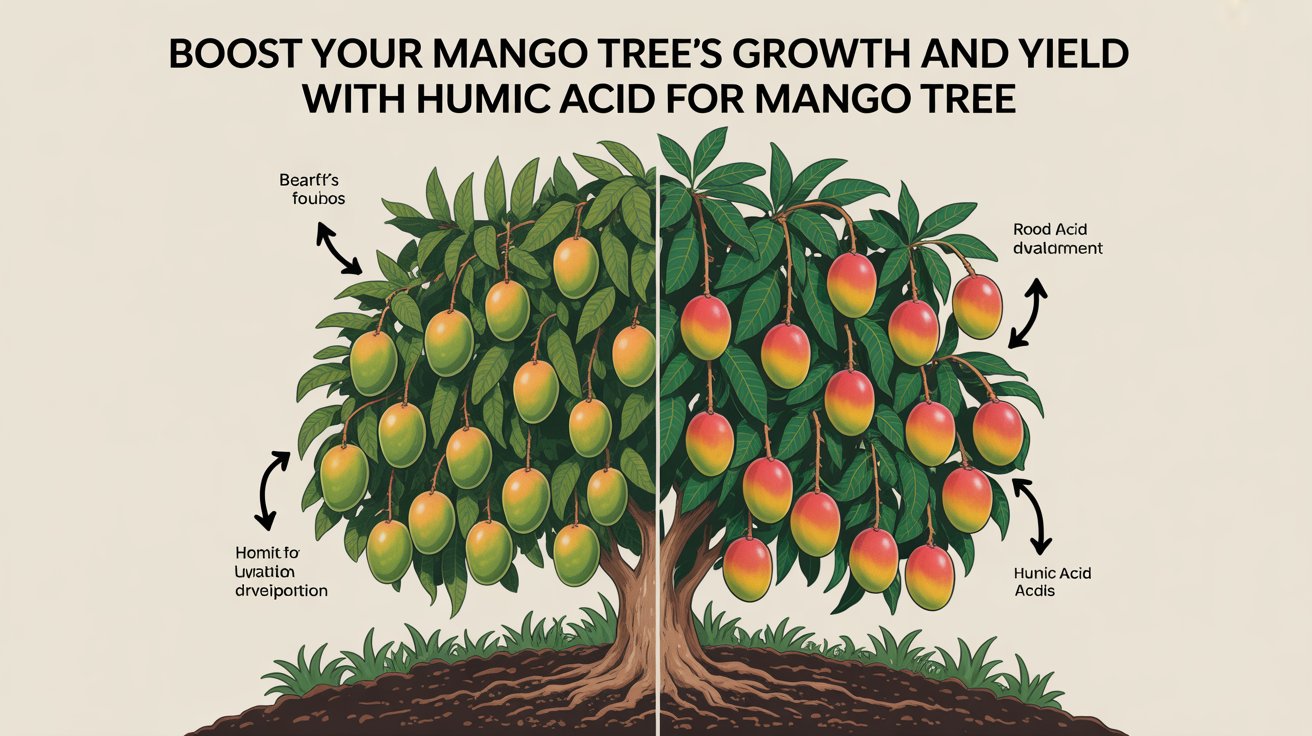
Mango trees flourish best when receiving the appropriate nutrients, and using humic acid for mango trees is a natural approach to help improve soil fertility and to promote healthy tree growth. Humic acid has multiple benefits for soil systems including improving soil structure to promote deeper rooting and better water retention and nutrient retention to establish more ideal conditions for growing healthy mango trees.
Using humic acid fertilizer, benefits increase nutrient uptake and assists the tree’s defenses in managing stress (such as by adapting to environmental conditions). This results in improved flower formation, fruit set, and yield of quality mangoes. Humic acid can be applied on a regular basis over time to establish better soil fertility and to reduce reliance on chemical fertilizers, and to improve long-term health and sustainability of your orchard.
Farmers and gardeners that apply humic acid show healthier mango trees, stronger trees, larger, better tasting fruit from season to season and exponentially easier harvests. Humic acid can be added to the soil as a soil drench or potentially with other fertilizer products, an environmentally safe committed practice can realize better growth and fruit and production in mango trees.
Introduction: Unlocking the Secret to Thriving Mango Trees
Mango trees are very sensitive to soil quality and nutrient availability; therefore, proper management is a critical factor in providing for optimal growth and fruit production. Humic acid for mango trees is a naturally-derived growth enhancer that adds organic matter to the soil, aids the soil's retention of water, and enhances microbial activity associated with nutrient cycling. All three factors optimize root development, vegetative growth, and flowering, and build a positive base for stocking the growing environment; thus, providing for a healthy mango orchard throughout the year.
Unlike conventional fertilizing, a humic acid fertilizer will provide long term improvement in the soil's physical properties and slow improvement; thus, providing the long-term capacity for the proper condition in which mango trees can flourish. Timely treatment builds this long-term condition, decreases excessive additions of chemicals, and manages natural defenses to the many varieties of environmental stress to which mangoes are subject.
Why Mango Trees Benefit from Humic Acid
- Enhanced Nutrient Availability: Increases the bioavailability and plant uptake of essential minerals through humic acid chelation to be more root friendly.
- Enhanced Soil Structure: Improves soil aeration and holding capacity to lessen root stress.
- Root Development: Enhances lateral roots and tap root development that increases nutrient uptake.
- Protection from Stress: Helps to cope with drought stress, temperature swings, and increased disease pressure.

Humic Acid Fertilizer vs. Traditional Fertilizers
To maximize the growth and yield of mango trees, it's important to understand the distinctions of humic acid fertilizer compared to mainstream chemical fertilizers. Humic acid for mango tree applications are geared towards building soil health and increasing nutrient uptake in a natural way. Traditional chemical fertilizers are designed to just provide limited, isolated nutrients. Whereas, unlike traditional chemical fertilizers, humic acid improves soil structure, increases microbial life, and improves long-term fertility. This allows the roots of the mango tree to uptake nutrients more effectively, developing a stronger, healthier mango tree, while also increasing the quality of the fruit.
Traditional chemical fertilizers are effective at providing immediate nutrient availability; however, they may contribute to nutrient leaching (the nutrient is washed away), soil degradation and decrease in microbial activity. Humic acid, as a soil conditioner, improves the cation exchange capacity (CEC) of the soil, helps hold water, and will slowly release nutrients into the soil. Humic acid conditions the soil and helps sustain growth, but may also reduce the need for repeated applications of conventional or chemical fertilizers, making it more environmentally friendly and economically viable alternatives for mango orchard management.

Mango growers that choose humic acid fertilizer instead of conventional or organic fertilizers can see stronger trees, better nutrient uptake, as well as productivity, making it a valuable investment in sustainable agriculture.
The Role of Humic Acid in Mango Tree Nutrition
- Promotes Flowering and Fruiting: Increases the addition of nutrients needed for flowering and fruit set.
- Enhances Photosynthesis: Increases chlorophyll production and leaf health which leads to high fruit quality.
- Microbial Interaction: Encourages beneficial microbial interactions that will decompose organic matter and release nutrients in a form plants can access.
Using humic acid for mango trees as part of a comprehensive nutrient management program will promote healthy growth, high yields and a tree that thrives and is more resilient. Regular applications of humic acid fertilizer are an excellent way to turn a basic orchard into a productive, sustainable mango plantation.
What is Humic Acid and How It Supports Mango Trees
Humic acid is a naturally formed organic compound from the decomposition of plant and microbial debris. Humic acid is extremely beneficial at improving soil fertility and as a result, plant growth.
Benefits:
- Strengthening the root system, assisting with nutrient uptake, and improving overall leaf health of mango trees.
- Improving soil aeration and water-holding capacity, thus reducing tree stress during dry periods.
- Enhancing natural disease and pest resistance to the mango tree.
Humic acid functions as a soil biostimulant and allows mango trees to use nutrients more effectively, thus improving tree growth and ultimately fruit production, making it an essential input for sustainable management of mango orchards.
Understanding Humic Acid for Mango Tree Growth
The application of humic acid fertilizers to mango trees can offer many immediate benefits for growth and fruit production. Humic acid works in synergy with the soil matrix by releasing nutrients that are bound to inorganic soil and make those nutrients available to mango trees' absorb roots.
Benefits include:
- Increased flowering and fruiting by direct access to nutrients bound to soil.
- Increased cation exchange capacity (CEC) creating nutrition availability and balanced soil pH allowing efficient use of essential minerals by mango trees.
- Increased microbial activity that supports soil health long term and improves soil fertility.

How Humic Acid Fertilizer Works in Mango Orchards
Humic acid fertilizers are able to work by incorporating into the soil to improve soil physical, chemical, and biological properties. The organic acids present in humic acids lead to increased nutrient mobility, reduced nutrient leaching, and improved plant metabolism.
Modes of Action:
- Nutrient Chelation: Help roots take up iron, zinc, and other micronutrients more effectively.
- Soil Conditioning: Enhances porosity, improves moisture retention, and increases soil organic matter.
- Improved Stress Tolerance: Mango trees soaked with humic acid fertilizers are more tolerant to thermal stress, drought stress, and pathogen pressure.
By using humic acid fertilizers on mango trees, growers may see more homogenous growth, increased yield, and improved fruit quality which reduces the reliance on chemical fertilizers.
Key Nutritional Benefits of Humic Acid for Plants
Humic acid delivers essential organic compounds for the nutrition and health of mango trees. It is full of functional groups containing a high cation exchange capacity that increases nutrient availability and improves soil--plant interactions.
Nutritional Benefits:
- Stimulates nitrogen, phosphorus, and potassium uptake essential for normal growth of the tree.
- Stimulates the uptake of vital micro-nutrients, such as iron, manganese, and zinc.
- Enhances enzymatic activity of the root, enhancing metabolic efficiency.
- Increases chlorophyll and photosynthetic activity, which increases tree vigor.

The Science Behind Humic Acid: Enhancing Soil Health and Mango Yield
Humic acid is an organic substance that is naturally found in the environment and is significant for soil health and plant growth. Mango tree humic acid can improve the overall productivity of mango orchards and the quality of the mango fruit. Humic acid works as a biostimulant to the soil to improve root establishment and development, nutrient uptake and stress tolerance; all contributing to improved trees and increased yield.
Benefits;
- Acts as a natural soil conditioner, enhancing soil aeration and water retention.
- Improves nutrient uptake efficiency, particularly nitrogen, phosphorus and potassium.
- Promotes better flowering and fruiting of mango trees to increase yield potential.
Improving Soil Structure and Fertility with Humic Acid
Humic acid fertilizer is used directly to enhance the chemical and physical properties of the soil. It acts with the soil particles to create improved rooting conditions and structure for mango tree growth.
Benefits of using humic acid are:
- Decompress compacted soil, increasing root penetration
- Increase soil Cation Exchange Capacity (CEC), allowing the soil to retain more nutrients
- Buffer soil pH so they are stable and promote microbial activity and nutrient availability

Stimulating Microbial Life and Soil Enzymes
Humic acid supports the growth of beneficial bacteria, fungi, and soil enzymes that are vital for nutrient cycling and soil health. This is especially important with mango trees - humic acid works symbiotically with other natural processes to stimulate these natural cycling processes while supporting sustainable and ecologically responsible mango production.
Humic acid:
- Encourages the development of nitrogen-fixing bacteria and phosphate-solubilizing microbes.
- Stimulates the enzymes that break down organic matter into plant available nutrients.
- Stimulates increased soil biological diversity and sustainability in creating soil health and resilience.
Increasing Nutrient Availability for Mango Trees
We consider the role of Humic acid fertilizer in boosting the bioavailability of nutrients grown and assisted by mango trees probably to be among humic application's most important roles. On its own, humic acids have chelating characteristics, plus their unique molecular composition, begin a process that enhances the uptake of microbial generated micronutrients by roots.
Nutritional implications:
- Promotes increased uptake of essential macro and micronutrients (N, P, K, Fe, Zn, Mn).
- Enhancement of root surface area and root function for nutrient uptake.
- Resulting in improved growth, fruit set and quality.

Best Practices for Applying Humic Acid Fertilizer to Mango Trees
To gain the benefits of humic acid for improving nutrient uptake in soil, improving root growth, and improving the overall productivity of the tree, it is important to apply it appropriately to mango trees. As a natural biostimulant for soil, humic acid fertilizer allows for increases in nutrient uptake, promotes microbial activity, and helps plants withstand environmental stress. Good application practices will allow for the greatest absorption rates for humic acid and other fertilizers as well as reducing the loss of humic acid and associated monetary waste of fertilizers.
Key Best Practices for Applying Humic Acid Fertilizer:

By following these practices, mango growers can ensure that humic acid for mango tree applications lead to healthier trees, improved fruit quality, and sustainable orchard productivity.
Application Methods for Maximum Effect
Humic acid can be applied to enhance mango tree growth by using a number of methods, each having advantages depending on soil conditions or tree age.
Some applications of humic acid would be:
- Soil Drench: Applying a humic acid solution at the base of the tree. This method enhances nutrient availability in the root zone while also improving the tree's ability to grow roots deeper into the soil.
- Foliar Spray: Spraying diluted humic acid directly on the leaves of the tree. This method promotes immediate nutrient uptake while also improving the tree's tolerance to stress.
- Sprouting Seedling / Sapling Treatment: At planting time, applying humic acid. This promotes root establishment and long-term growth.

Dosage and Timing Recommendations
Using the appropriate amount of humic acid for mango trees is essential to maximize the benefits and avoid nutrient imbalances in the soil. Humic acid fertilizer is a natural biostimulant that assists with root establishment, nutrient absorption, and general plant health. It is very important to apply humic acid fertilizer at the right time and in the right amount so that mango trees can achieve optimum vigorous growth, flowering, and fruit production.


Further Best Practices:
- For optimal absorption rate, apply dosing of total amount across multiple applications.
- For foliar sprays, avoid application during peak sunlight or heavy raining periods.
- Observe/monitor tree reaction and modify dosage for soil fertility and environmental conditions.
Following these timing and dosage prescriptions will help mango growers ensure the greatest uptake of humic acid fertilizer, leading to improved tree health, increased yield, and improved quality of fruit.
Combining Humic Acid with Other Fertilizers
When applied to mango trees, a humic acid product can improve the overall health of the tree while enhancing the effectiveness of nutrient uptake. Humic acid products act as both a soil conditioner and biostimulant to improve nutrient uptake and root growth. When combined with N,P,K fertilizers, or micronutrients, it improves the uptake of N,P,K by the plants and improves its efficiency of utilization, increases yield, and reduces nutrient loss. With combinational application of nutrients (N,P,K) and humic acid, the mango tree will have more than enough amounts and ratios of nutrients available to it, as well as improved soil structure and microbial function as a result of humic acid applications.
Key Points for Combining Humic Acid with Other Fertilizers:
- Increased Nutrient Availability: Humic acid increases the cation exchange capacity (CEC) of the soil, which allows for increased nutrient absorption from other sources when applied to the roots of mango trees as they make nutrients available.
- Improved Root Growth: NPK fertilizers with humic acid synergize to contribute to better root systems, enabling the tree to hold firmly and consume more water and nutrients.
- Increased Stress Tolerance: Other fertilizers with humic acid contribute to the mango tree’s ability to tolerate drought and heat and resist pest stress better than without any applied humic, contributing to healthier, more productive trees.
- Reduced Fertilizer Use: Humic acid increases the efficiency of nutrients, which may reduce the required amounts of chemical-based fertilizers, thereby saving money on fertilizing costs and decreasing environmental implications.
- Application Notes: Humic acid can be applied as a soil drench, or foliar spray in combination with other fertilizers at the same time. The best time to maximize the use of humic acid is when applied to mango trees at the time of active growth or when flowering and fruiting occurs.
Through the proper combination of humic acid fertilizer with other nutrient sources, mango growers can achieve optimal growth, increased fruit yields, and soil fertility that lasts and can facilitate sustainable management of the orchard.
Best Practice with Humic Acid Fertilizer:
When using chemical NPK fertilizers, combining with a humic acid will improve nitrogen, phosphorus and potassium uptake. Like all fertilizers, do not apply too much, as it will start to compete for nutrients. If applying in chemical fertilizers, especially at high concentrations, you may want to separate the application of the humic acid, and applying monthly is probably OK to maintain the adequate levels of humic acid without degrading it.

Using humic acid for mango tree, humic acid fertilizer, and humic acid effectively through proper application methods, dosage, and combination strategies ensures stronger trees, better yields, and sustainable orchard management.
FAQ
Q1 What is humic acid, and how does it benefit mango trees?
Humic acid increases soil fertility, enhances root development, and improves the overall health of mango trees.
Q2 How does humic acid fertilizer enhance mango tree growth?
Humic acid fertilizers enhance growth by improving nutrient uptake by roots and increasing tree thickness, height, root development, and ultimately yields..
Q3 Can I apply humic acid for mango trees with other fertilizers?
Yes, humic acid applications in mango trees can be properly compatible with NPK and micronutrient fertilizers.
Q4 What is the ideal dosage of humic acid for mango trees?
For soil applications, 50-100 g can be applied per young tree (i.e., 4-8 yr old trees), and for mature mango trees, 200-500 g can be applied, or alternatively, you can spray or apply 1-2 liters of liquid humic acid for foliar the application for each tree for season.
Q5 When is the best time to apply humic acid for mango trees?
The best application timings of humic acid on mango trees are during vegetative growth (early) to the work pre-flowering to improve application timing during fruit growth phase.
Conclusion: Transform Your Orchard Today – Harness the Power of Humic Acid for Healthier and More Productive Mango Trees
Using humic acid to manage mango trees in an orchard environment represents a purposeful change for soil and plant health. Humic acid will ameliorate soil structure and nutrient availability, and support quality root growth. Because of this, your mango trees will have a better quality of nutrition to support vigorous development and increased fruit production. The use of humic acid as a preservative crowns on a nutrition program will improve nutrient use efficiency for trees and diminish nutrient losses.
Humic acid is a viable use to not only improve tree vigor and succulence of mango tree productivity, but also improve tree resistance to adverse environmental conditions such as drought conditions, pest populations, and diseases. The continued use of humic acid as a soil amendment to soil fertility will in the long term improve soil health towards a nutritional balance. Farmers using humic acid as part of their integrated crop management (ICM) practices understand healthier trees yield more and bigger fruit that is better tasting, and orchards sustainability overall for farming practices.
Investing in humic acid for your mango tree care is investing in the future of your orchard and sustainable farming practices that will maximize productivity, whether you use it via soil amendments or foliar sprays. Embracing the benefits of humic acid fertilizer will turn your mango orchard into a thriving, high-yielding, sustainable operation, while ensuring high quality harvests every season.