

Leonardite Humic Acid: A Complete Guide for Healthier Soil and Higher Crop Yield
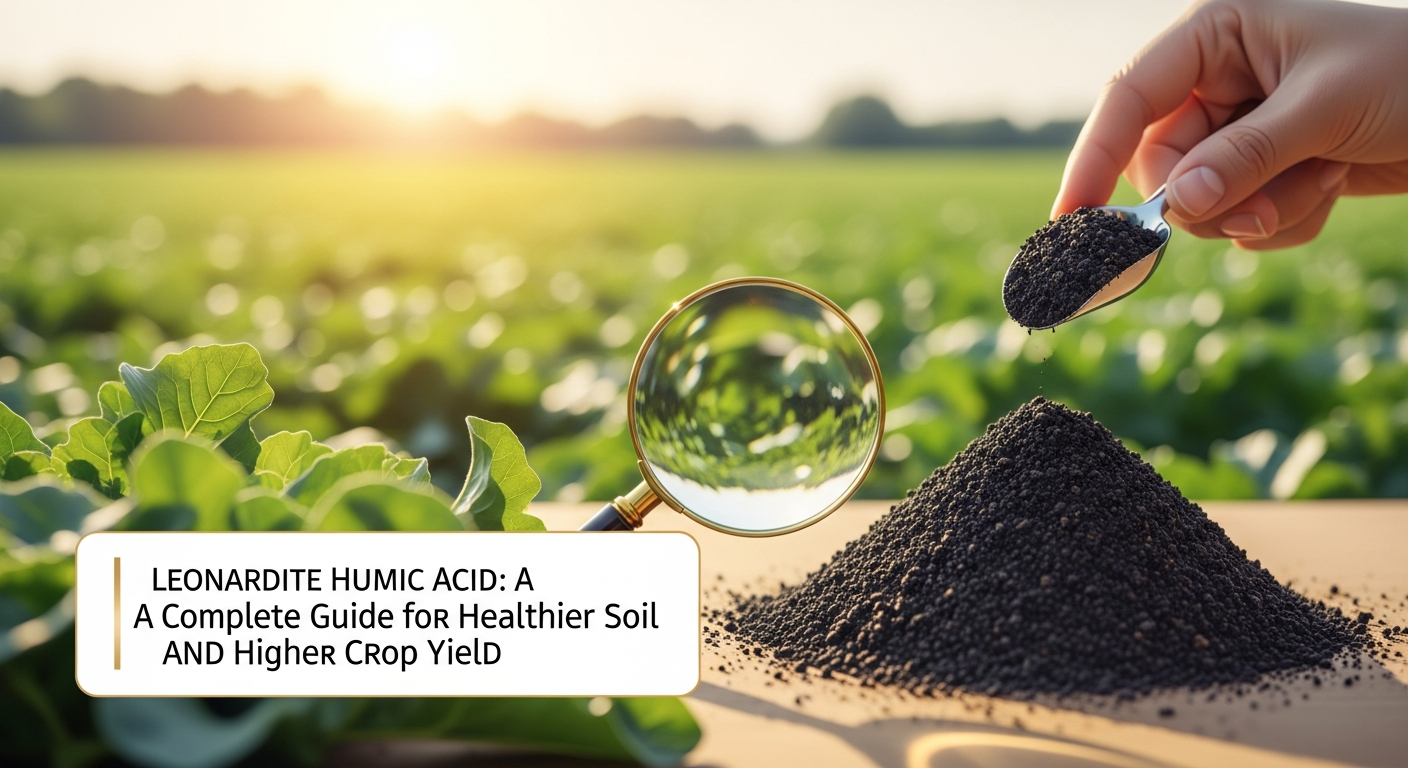
Leonardite is formed through the oxidation of lignite, which is a type of soft brown coal and has a high content of humic acid, containing other naturally occurring organic materials needed by plants and soil.
Leonardite contains humic acids as well as fulvic acids, and other active organic materials, and these components play a key role in improving soil structure and increasing plant growth through improved nutrient availability.
Humic acid derived from Leonardite is an effective way to increase crop yields and restore vitality to soil by retaining moisture in dry soils and increasing nutrients in crops. Leonardite fertilizer will improve the long-term health and productivity of soil.
What Is Leonardite Humic Acid and Why It Matters in Agriculture
Leonardite Humic Acid is an organic soil amender originating from the aerobic breakdown of lignite (defined as soft coal). Leonardite contains essential organic constituents, including humic acids and fulvic acids that enhance soil structure, fertility and plant vitality.
Humic acid from leonardite has been marketed as the natural way to enhance soil conditions and to increase agricultural productivity while decreasing the dependency on chemical fertilizers in modern agriculture. Versatile and user-friendly for both conventional and organic methods of farming, Leonardite also plays a large role in establishing sustainable agricultural practices.
Origin and Natural Formation of Leonardite
Leonardite is a product of the slow breakdown over millions of years of organic plant material in a specific environment pleased with heat and pressure.
Important Information
- Additionally, Leonardite is formed from the breakdown of organic plant materials, (the same way coal is formed).
- Fewer deposits of Leonardite have been found in many places throughout the world, including North America.
- There is a much higher concentration of humic substances in Leonardite than in regular coal.
- Leonardite is relatively easy to harvest and produce for agricultural use.
It is non-toxic, environmentally friendly.
Composition of Humic Acid from Leonardite
Leonardite provides humic acids, fulvic acids, and humins, making them important organic components of soils.
- Humic acid enhances the ability of soil to hold water and nutrients.
- Fulvic acid helps with both nutrient absorption and movement within the plant.
- Humic acid contains essential minerals like potassium, calcium, and magnesium.
- Humic acid is an effective, naturally occurring chelator that binds nutrients to allow plants to uptake more easily.
Leonardite's humic acid has three different types of humic components: Humic Acid, Fulvic Acid, and Humins—all providing soil and plant benefits.
Why Leonardite Is Preferred for Agricultural Use
Leonardite is one of the best sources of humic acid because of its high quality, a low environmental impact, and ease of access.
Key Points
- Contains more humic material than compost or organic matter
- Processed and made into a useable product for agriculture
- Available as either a liquid or a dry formulation for applying various ways using humic acid.
- Safe for organic farming and sustainable agriculture
- Improves crop yields over the short term as well as long-term soil fertility.

The Science Behind Leonardite Humic Acid in Soil
Leonardite humic acids are a concentrated and highly active source of organic material created through the oxidation of lignite (also referred to as "soft") brown coal. As a rich source of humic substances, Leonardite's humic acids are critical for improving the structure and fertility of soil, and stimulating microbial activities.
By understanding how Leonardite fertilizers work within the soil, farmers and gardeners can maximize their potential for healthy and productive plants. Therefore, Leonardite fertilizers not only increase nutrient uptakes; they also improve soil resilience and sustainability.
Improving Cation Exchange Capacity (CEC)
Cation Exchange Capacity (CEC) is a measurement of how well the soil can hold and exchange all the essential nutrients it needs to produce healthy plants. Leonardite humic acids have been shown to improve CEC, making it possible for the soils to retain and exchange nutrients more effectively.
Key Features
- Improves nutrient retention and exchange capabilities for fertile soils
- Provides many additional places to bind and hold nutrients
- Creates a conducive environment for greater availability of key nutrients such as potassium, magnesium and calcium
- Enhances soil fertility for both sandy and clay based soils
- Provides balanced nutrients and improves soil stability
Nutrient Chelation and Availability
The ability of Leonardite humic acid to soil binds or combines with essential nutrients, improving plant nutrient uptake is one of its main roles and a key function of Leonardite humic acid.
Benefits of Humic Acid from Leonardite
- Increase Micronutrient Availability in Soil
- Very Little Nutrient and Water Loss to Nutrient Leaching or Nutrient Runoff
- Create a Stable Complex with Nutrients such as Iron and Zinc, Manganese and Copper
- Improved Nutrient Uptake Efficiency for Plants
- Reduced Nutrient Fixation in Acidic/Alkaline Based Soil
More Detailed Description of the Humic Extract of Leonardite What is a humic extract? It is a chelating agent that forms stable chelate complexes with the most available micronutrients and helps prevent micronutrient unavailability in plants. As a result, it allows for greater root absorption of micronutrients (iron, copper, zinc, etc.) for healthy plant growth and maximum crop yield.
Enhancing Soil Microbial Activity
Leonardite's humic acid serves as a food source for the beneficial microorganisms in the soil, promoting their activity and improving soil health.
Benefits of Using Leonardite as a Food Source for Beneficial Microorganisms
- Promotes the Growth of Bacteria, Fungi and Actinomycetes
- Increases Microbial Diversity - Thus Providing Better Cycling of Nutrients
- Reduces Soil-Borne Diseases by Improving Microbial Balance
- Enhances the Decomposition of Organic Matter, Making Nutrients Available to Plants

Key Agricultural Benefits of Leonardite Humic Acid
Leonardite humic acid is one of the most powerful natural soil amendments used to increase the fertility of soils and the health of plants. Obtained from oxidized lignite, Leonardite humic acid contains a variety of organic acids, minerals and certain compounds necessary for soil health, plant health and root growth.
When applied to soil, Leonardite will provide both immediate and long-term benefits, making it an important part of any sustainable farming plan. The following information outlines the primary agricultural benefits of Leonardite humic acid, which are very beneficial in improving both soil conditions and the yields of crops.
Stronger Root Development
One of the most important benefits associated with Leonardite humic acid is its ability to stimulate the growth of roots.
Key Benefits
- Promotes root growth and branching
- Provides enhanced nutrient absorption from the soil
- Assists in developing healthy root systems, even in less than ideal soils
- Helps to create deeper root systems for increased stability
- Promotes rapid establishment of seedlings
Detailed Description: Leonardite humic acid acts as an effective natural root stimulant because it promotes the growth of robust root systems via its ability to improve soil structure and improve the availability of nutrients. The development of healthy root systems is especiallyimportant during the initial establishment of a crop's roots.
Improved Crop Yield and Quality
The use of Leonardite's humic acid dramatically enhances yield and quality of crops through increased nutrient efficiency as well as enhanced growth of plants.
Increased Overall Yield of Crops
- Larger and Higher Quality Fruits and Vegetables
- More Consistent Crops Provided Across Field
- Assistance to Increase Photosynthetic Capability of Crops and Aid in Enhanced Nutrient Absorption
- Reduced Plant Stress During Periods of Growth
Longitudinal Paragraph The use of humic acid from Leonardite provides an exemplary improvement in crop yield and quality as compared to their use without the addition of humic acid. The application of humic substances with the application of Leonardite increases the Cation Exchange Capacity (CEC) of the soil, thereby allowing for a higher level of nutrient absorption by plants. This improvement takes place through the promotion of healthier roots and root systems, and ultimately results in crops being more resilient and growing at greater rates, thus producing a consistent quality produce across fields and a higher quality of harvestable fruit and vegetables.
Better Water Retention and Soil Structure
By improving soil physical properties, humic acid from Leonardite enhances soil's ability to hold moisture and nutrients.
Increased Water Retention for Sandy Soils
- Improved Drainage for Clay Soils
- Increased Aeration and Root Growth
- Decreased Erosion and CompactionImproving Long-Term Fertility of Soil
The ability of humic acid to enhance the physical structure of soil is one of the major benefits of Leonardite. Humic Acid from Leonardite will not only improve the ability of Sandy Soils to retain moisture by increasing the amount of water they can hold but also increase the drainage of Clay Soils, thus, providing access to moisture for plants when they need it most while preventing moisture from being lost during dry spells. Increased Stability of Soil through improved root penetration due to improved soil aggregation.

Leonardite Humic Acid vs Other Soil Amendments
Agricultural producers have many options when it comes to soil amendments. Many products are available today, but these products have strengths and weaknesses, especially when it comes to their effect on soil quality. Leonardite is a naturally occurring material and has been shown to be one of the most effective soil conditioners in improving soil structure, increasing plant available nutrients, and promoting healthy plant growth.
Compared to other products such as lignite, peat moss, compost, or traditional fertilizers, Leonardite offers a unique combination of properties and benefits that make it an attractive long-term solution for many growers.
Leonardite vs Lignite and Peat Moss
Both Leonardite and Lignite originate from organic materials; however, the two products have many differences regarding their properties and uses.
Key Differences:
- Leonardite contains more concentrated amounts of humic substances than Lignite, therefore, it is more effective than Lignite on improving soil fertility.
- Lignite has much less humic acid than Leonardite, therefore it is less efficient for direct application to soils.
- Peat Moss has a high organic matter content but lacks humic acid's property to enhance nutrient availability to crops, which behaves therefore more like a mulch.
The extraction and production of humic acid from Leonaridte is much more economical than the traditional forms of extracting humic acid, allowing for a consistent quality.
Leonardite Fertilizer vs Compost
Leonardite fertilizer is commonly compared to compost, which is also an organic source of nutrients.
Key Points
- Leonardite provides quicker improvements to soil fertility than compost.
- Compost contains a high amount of organic matter, but does not contain the concentrated humic acids that Leonardite contains.
- Leonardite fertilizes the soil by improving nutrient uptake, while compost adds organic matter and micro-organisms.
- Compost increases microbial activity in the soil, whereas Leonardite increases the biological and chemical properties of the soil.
Why Farmers Prefer Leonardite-Based Products
Because of the consistent reliability and lower cost to produce, many agricultural professionals and farmers alike have turned to Leonardite Fertiliser because of its many benefits for crop productivity and overall health of the soil.
Leonardite-based products combine the following aspects:
- Leonardite products are easily integrated into producers’ current soil management practices.
- Leonardite humic acid provides immediate benefits to soil and plants.
- Leonardite products can be applied to numerous crops and conditions
- Leonardite products are a more sustainable option compared to synthetic fertilizer.
Farmers report a higher crop yield when using Leonardite Fertiliser and having healthier soil with each application.
How to Apply Leonardite Humic Acid Effectively
Utilizing the correct application method of Leonardite humic acid will allow for your plant and soil to utilize the total capacity of this product. The application of Leonardite humic acid will improve soil health, improve growth of crops, improve the plants' ability to absorb nutrients from the soil; however, like any other product, how you apply the product has an impact on its benefits to your plants.
To receive the greatest benefit from Leonardite's fertilizer products; you need to understand the correct method, application timing and the amount to use depending on your soil type and crop requirements. Below are the ways to apply Leonardite humic acid for optimal results when growing your crops.
How to Apply Leonardite Humic Acid Effectively
Key Points:
- Apply Leonardite humic acid before planting or in early stages of growth
- The best application methods of Leonardite humic acid include the use of Irrigation Systems, Broadcasting or Physical Application into the soil by mixing into the soil.
- Leonardite humic acid can be combined with Fertilizer to enhance their effectiveness.
- When applying Leonardite humic acid, apply it on moist soil as it will improve its absorption by your plants.
Leonardite's application method will vary based on the conditions of both the soil and the growing stage of the plant. Leonardite humic acid can be incorporated into the soil or utilized through Irrigation for uniform distribution in the soil.
Foliar Spray Application
Important Points:
- Best for Rapid Uptake and Quick Plant Reaction.
- Recommend Applying During Vegetative and Reproductive Stages.
- Helps Recover from Stress (Droughts, High Heat) Quickl
- Use for Immediate Nutrient Uptake Through the Leaves.
When Leonardite Humic Acid is applied through a foliar spray, its nutrients immediately penetrate and are absorbed into the leaves. This gives plants immediate relief from stress and boosts their metabolism. Leonardite Humic Acid's ability to enhance nutrient absorption into the leaf surface and its ability to enhance the efficiency of photosynthesis makes Humic Acid from Leonardite an excellent product for enhancing plant growth during critical growth stages (vegetative and reproductive).
Recommended Dosage and Timing
Proper Timing and Dosage Guidelines
Important Points:
- For all established plants, apply 1-2 times during a growing seaso
- If the soil is in poor condition or does not have adequate nutrients, use a higher dosage in the early season.
- Avoid applying during very hot weather or periods of direct sunlight.
- Use appropriate rates based on the soil test results and requirements of your specific crops.
The proper timing and dosage for using Leonardite Humic Acid depend largely on the different soil types and on the various crop varieties. Leonardite Humic Acid is typically applied at rates of between 1 and 4 liters of Humic Acid per acre (based on soil conditions). Higher rates should be applied early in the growing season to improve nutrient levels in nutrient-deficient soils
Sustainable Farming Benefits of Leonardite Humic Acid
Humic acid from Leonardite is by far and away the most beneficial and sustainable soil amendment now available for agriculture. Humic acid from Leonardite provides soil with the nutrients it needs to sustain itself, support plant growth, and reduce the negative impact on the environment. Using Leonardite fertilizer in agriculture can significantly decrease the amount of synthetic chemical fertilizers farmers must use,
improve the quality of the soil and contribute to long-term sustainability. Farming by utilizing Leonardite humic acid not only improves productivity but also assists in the development of eco-friendly and regenerative farming methods.
Reduced Chemical Fertilizer Dependency
Leonardite humic acid increases the uptake of important nutrients by the plant thus improving the efficiency of application of synthetic chemical fertilizers while at the same time reducing the need for the use of synthetic chemical fertilizers.
Points to Remember
- Increases nutrient availability in the soil
- Improves the efficiency of synthetic chemical fertilizers
- Prevents nutrient leaching and runoff
- Decreases the use of synthetic chemical fertilizers
- Maintains soil health without excessive reliance on synthetic chemical fertilizers.
Revised Paragraph Leonardite humic acid allows for the enhancement of the availability of nutrients within the soil by facilitating the combination of vital nutrients with other nutrients. This allows for increased availability of nutrient nutrients to the plant roots, which leads to increased plant growth and reduced reliance on synthetic chemical fertilizers, which tend to lead to nutrient runoff, soil degradation, and the subsequent degradation of the environment.
Soil Regeneration and Carbon Sequestration
The method of using Leonardite humic acid for soil regeneration is based on its ability to increase the amount of organic carbon in the soil along with its ability to help store that carbon in the soil.
Key Points
- Increases the amount of organic carbon in the soil
- Helps develop better soil structure and increases water retentio
- Stimulates and increases the level of microbials in the soil
- Provides for increased long-term soil fertility
- Helps reduce soil compaction and erosion
One of the primary advantages of humic acid produced from Leonardite is that it has the ability to regenerate soil health. The organic matter that is generated from humic acid produced from Leonardite improves soil carbon composition and supports the development of better soil structure, providing for more resistant soils to compaction and erosion.
Eco-Friendly and Organic Farming Compatible
Leonardite humic acid is appropriate for all organic farming principles. This makes Leonardite a perfect choice for growers who are concerned about the environment and seeking a sustainable method for growing crops.
Key Points
- Made from organic materials
- Has certification of use in certified organic farming systems
- Improves soil health without the application of synthetic chemicals
- Provides for improved biodiversity and equilibrium within an ecosystem
- Reduces the need for the use of hazardous fertilizers and pesticides
For farmers practicing organic farming, the use of humic acid derived from Leonardite provides an easy and excellent way to improve soil fertility and produce healthy plants. Humic acid produced from Leonardite is made from renewable resources rather than from synthetic fertilizers and pesticides. This provides a means of preserving the ecology and supporting the beneficial microorganisms within the soil.

How to Choose Quality Leonardite Humic Acid Products
Selecting high-quality Leonardite humic acid products is important for improving your soil health and achieving maximum yields from your crops. Leonardite humic acid is one of the most effective types of soil amendments, but each product may vary considerably in terms of their concentration, purity, and effectiveness. Knowing the qualities of a good Leonardite humic acid product will allow you to select a top-quality product that offers tangible benefits to your crops and soil.
High Humic Acid Content
A product's concentration of humic acid is an important consideration when choosing one made from Leonardite.
Important points to remember:
- Choose Leonardite humic acid products containing 60% to 80% dry humic acid.
- A higher concentration of humic acid significantly increases the ability of your plants to retain nutrients and grow effectively.
- The concentration of a product influences how much you need to apply; a more concentrated product will require you to use less of it.
- Leonardite humic acid products that are high in humic acid improve the structure of the soil, increase nutrient availability, and enhance microbial activity.
When you are selecting a Leonardite humic acid product, you should always check the concentration of humic acid. A higher concentration indicates a product that will have a greater impact on both soil structure and plant health. You should select a product that contains 60% or more dry humic acid for the greatest benefit on your crops.
Purity and Solubility Standards
Purity and solubilization of Leonardite fertilizer has a significant impact on the way it will perform in your growing medium.
Important Points
- Leonardite humic acid of High-Purity has very low ash and other contaminates.
- The solubility of your humic acid will determine the speed and ease with which your plants can access it.
- Purity is responsible for the efficacy and safety of the TOXIC product on your plants.
- A lower amount of impurities will reduce the amounts of salt present, thus providing better interaction with your soil.
The most important aspect of humic acids produced from Leonardite is the purity of the material. When looking for a good quality product, look for Leonardite humic acid with low levels of ash and being free of any toxic or heavy metals that may have a negative effect on plant health. Also, solubility is important to determining how well your humic acids will mix in the soil.
Trusted Leonardite Fertilizer Suppliers
A supplier with a Good Reputation is a necessity when it comes to Leonardite Fertilizer.
Key Points
- Use only Suppliers with a Good history of Quality and Customer Satisfaction.
- Check the Humic Acid content and Purity before purchasing any product.
- Look for any Certifications or Third Party Testing that ensure the Quality of the product.
- Purchase from Reliable Agricultural Suppliers, who provide full Transparency and Support.
Because all Leonardite Humic Acid is Not the Same Quality, choosing the right supplier will greatly affect the quality of Leonardite fertilizers you purchase. Quality Suppliers will source Leonardite fertilizers from respectable mining operations and test them for Purity and Efficacy.

FAQs:
Q1. What is leonardite humic acid used for in agriculture?
Leonardite humic acid is used to improve soil structure, increase nutrient availability, and enhance plant growth.
Q2. Is humic acid from leonardite suitable for all crops?
Yes, humic acid from leonardite can be used for a wide range of crops to improve soil health and boost growth.
Q3. Can leonardite fertilizer reduce chemical fertilizer use?
Yes, leonardite fertilizer enhances nutrient efficiency, reducing the need for chemical fertilizers.
Q4. How often should leonardite humic acid be applied?
Leonardite humic acid should be applied every 4–6 weeks during the growing season for optimal results.
Q5. Is leonardite humic acid safe for long-term soil health?
Yes, leonardite humic acid is safe for long-term soil health, improving fertility and structure over time.
Conclusion: Improve Soil Fertility and Crop Performance with Leonardite Humic Acid
Leonardite humic acid is an important resource for sustainable agriculture by providing both short and long-term improvements in soil health. The ability to improve soil structure and provide greater nutrient availability also supports plant growth when using Leonardite humic acid, which is important for the creation of healthier soils and higher yields from crops. Whether you are working with nutrient-deficient soil or trying to make the most efficient use of your fertilizers, Leonardite humic acid will provide you with consistent and valuable benefits across all types of crops and farming systems.
When using Leonardite fertilizers, the nutrients are used more efficiently, which reduces the need for excessive chemical applications, thus supporting sustainable farming practices. In addition, Leonardite humic acid provides the building blocks for supporting soil health, increasing microbial activity and improving water retention to create the best possible growing environment for plants. The collective humic extract effects of Leonardite humic acid will be experienced for several growing seasons resulting in improved soil fertility, better root development and higher yields each year.