

The Ultimate Comparison: Amino Acid vs Traditional Fertilizer for Better Crop Growth
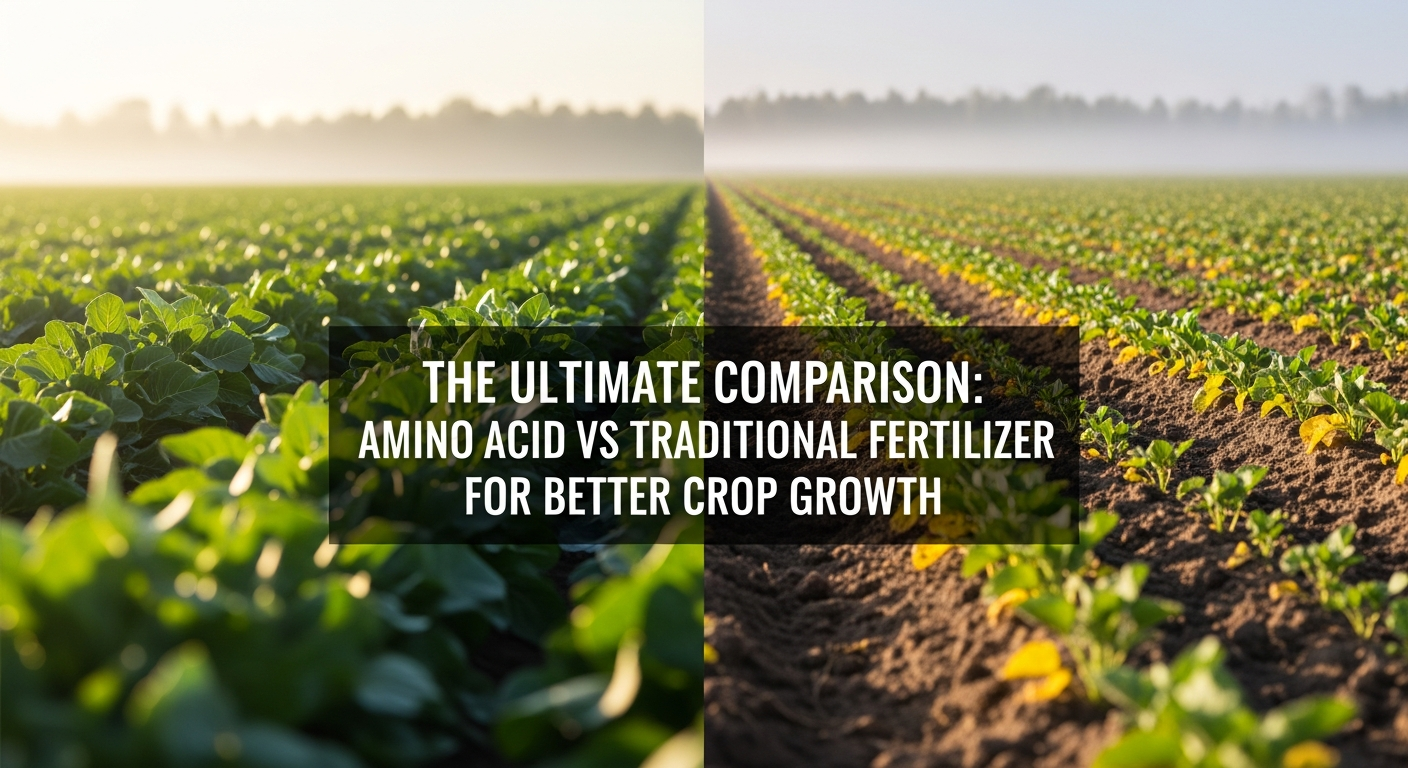
Both amino acids and traditional fertilizers are used extensively in modern agriculture to help crops grow better (i.e., producing more yield). The amino acids have received increased interest among farmers as a means of improving the efficiency of nutrients applied, improving soil health, aiding plants under stress, and decreasing reliance on the excessive use of chemicals.
Traditional fertilizers primarily provide crops with nutrients, such as nitrogen, phosphorus, potassium, etc., allowing for quicker plant growth via nutrient application. Alternatively, amino acids provide support to the plants by aiding in their metabolism (e.g., how the plants use their available nutrients), assisting nutrient uptake from the soil, building proteins in the plants, and increasing the plants' resilience to environmental stressors. Therefore, the use of amino acid-based fertilizers complements sustainable agriculture and integrated nutrient management systems.
Most available comparisons between the two fertilizers demonstrate how the use of amino acid fertilizers improves the efficiencies associated with nutrient uptake, root development, chlorophyll production, and tolerance to environmental stresses. At the same time, traditional fertilizers will continue to provide the majority of the nutrients necessary for high-yield agriculture by supplying immediate nutrient demand for crops.
Both fertilizers provide unique benefits or advantages that can be used towards improvements in crop quality and improvements in long-term soil fertility. Although there are many differences between the two types of fertilizers (e.g., cost), understanding the strengths and weaknesses of the two is important in determining how to best utilize amino acids and traditional fertilizers for better crop health, sustainable agriculture, and improved environmental conditions.
Understanding Amino Acid Fertilizers: What They Are and How They Work
Amino acid fertilizers represent a new type of agricultural input that naturally enhances plant nutrition, growth and the ability of crops to withstand stresses. From a comparative perspective on amino acid-based products and conventional fertilisers, amino acid products clearly deliver more than simply nutrients for crops. Specifically, amino acid-based fertilisers play an active role in enhancing the metabolism and use of nutrients within plants. Amino acids contained within these types of fertilisers are present in a bio-available form, which can be rapidly absorbed by plants, making them very effective in improving crop productivity.
Unrestricted by the limitations of conventional (N-P-K) fertilisers which only supply NPK nutrients, amino acid fertilisers function as bio-stimulants by enhancing the physiological and biochemical properties of plants through time. Therefore, they represent an essential part of sustainable and effective agricultural systems.
What Are Amino Acid Fertilizers?
An amino acid fertiliser represents a formulation containing free amino acids, hydrolysates of proteins or a complex of amino acids produced from natural plant or animal materials for the purpose of improving nutrient efficiency, plant vigour and tolerances to a range of stressors on crops.
Some principal characteristics of amino acid fertiliser
- Free amino acids are bio-available for plants.
- Nutrient absorption and use are improved through the use of amino acid fertilisers.
- Plant metabolism and protein synthesis are dependent on the activity of free amino acids in amino acid fertilisers.
- Amino acid fertilisers can be applied to plants using foliar sprays, through fertigation or by direct application to the soil.
How Amino Acids Help Plant Growth Naturally
Amino acids are the basic building blocks for all proteins and function as an integral component in nearly every aspect of plant growth. Because amino acids are readily available for use by plants without having to be produced internally, they provide energy savings to plants by reducing the amount of energy required to synthesize proteins internally while simultaneously improving the speed of growth processes.
Natural Growth Benefits of Amino Acids
- Encouragement of leaf and stem development through increased chlorophyll/P photosynthesis.
- Encouragement of root and shoot size through the production of larger roots and shoots.
- Improvement in flower and fruit production.
- Improved tolerance of stress due to drought conditions and high temperatures.

Amino Acid Chelation and Nutrient Absorption
Amino acids are also an excellent source of chelating agents (chelating agents bind to metals), which help plants take up essential micronutrients such as iron, zinc, and calcium. When amino acids bind to these micronutrients, they aid in transportation through the xylem and phloem.
Benefits of Nutrient Chelation Through Amino Acids
- Increased availability of essential micronutrients.
- Increased mobility of nutrients once they are inside of the plant.
- Decreased loss of nutrients due to leaching/evaporation.
- Increased efficiency of applied fertilizers.

Traditional Fertilizers Explained: Types, Uses, and Limitations
The last few decades have seen the continued development of traditional fertilisers as an essential tool for modern agricultural practices with increased productivity and improved rates of crop growth. At their core, traditional fertilisers are primarily valued for their ability to provide crops with essential nutrients (N, P, and K) directly. While they can often produce greater yields compared to their non-fertilised counterparts, prolonged or uncontrolled application can lead to long-term environmental and/or soil degradation.
When evaluating whether or not to use amino acids or traditional fertilisers as part of sustainable agricultural systems, it is important to fully understand both the benefits and drawbacks associated with traditional fertilisers before pursuing an effective comparison.
Types of Traditional Fertilizers in Agriculture
Agricultural uses for traditional fertilisers can generally be classified by chemical, mineral, and synthetic formulations of nutrients that have been developed to quickly replenish soil fertility.
Common types of traditional fertilisers are:
- Nitrogen Fertilisers (Urea and Ammonium Sulphate)
- Phosphorus Fertilisers (Diammonium Phosphate and Single Superphosphate)
- Potassium Fertilisers (Muriate of Potash or Sulphate of Potash)
- Compound Fertilisers (NPK Fertilisers

How Chemical Fertilizers Support Crop Production
Chemical fertilizers can be one of the most important products used to enhance agricultural productivity by providing concentrated amounts of necessary nutrients to plants so they can grow quickly.
Reasons why using Chemical fertilizers is beneficial
- Encouraging rapid vegetative (leafy) growth
- Increased possibility of producing a high harvest
- Healing nutrient deficiencies quickly
- Supporting 'intensive' farming systems.
Limitations of Synthetic Fertilizers
Although there are advantages to using Synthetic Fertilizers, there are also several disadvantages to their overuse (when excessive) and poor use (when improperly managed for nutrients).
Some examples of the major disadvantages of Synthetic Fertilizer use include:
- Loss of soil structure (soil is broken down, resulting with less organic matter)
- Increase (leaching) loss of nutrients into ground water
- Decrease in Microbial (good bacteria) activity in soil
- Increase in repeat applications of Fertilizers depending on yield requirements.

Key Differences Between Amino Acid and Traditional Fertilizers
As increasing numbers of farmers turn to both amino acid and traditional fertilizer methods of fertilization in the growing industry of agriculture, the opportunity has emerged for farmers to increase crop production while enhancing soil health and long-term durability. Both fertilizers use the same purpose; however, these two types of fertilizers work quite differently when furnishing plant nutritional requirements. Traditional fertilizers give nutrients to the plants; therefore, they do not affect how efficiently plants utilize nutrients (how efficiently they absorb, transport, or use the nutrients).
When comparing amino acids to traditional fertilizer successfully, farmers can be better prepared in regard to which method is best suited to meet future production demands, protect our environment through responsible farming practices, and create strong, resilient plants that produce abundantly.
Amino Acid vs Traditional Fertilizer: Nutrient Efficiency
The foremost difference between traditional fertilizer and amino acid fertilizers is the efficiency with which each type of fertilizer supplies nutrients. Traditional fertilizers generally provide nutrients to the ground; however, many times, plants do not utilize these nutrients effectively (if at all). By improving the plant's metabolism and effecting the chelation process for micronutrients, amino-acid-based fertilizers improve a plant's nutrient usages.
Benefits of Nutrient Inefficiencies with Amino Acid Fertilizers:
- Quicker Absorption of Nutrients
- Reduces Waste of Nutrients
- Improves Availability of Micronutrients
- Enhances Protein Production in Plants
Impact on Soil Health and Microbial Activity
For many people who are concerned about soil health, there are numerous reasons to choose amino acid fertilizer. First, amino acid fertilizers support a balanced microbial population in the soil and enhance biology in the soil, while too much of a synthetic fertilizer can reduce the diversity of microbes in the soil over time.
Some of the advantages of an amino acid fertilizer to soil quality include:
- Increasing populations of beneficial bacteria and fungi
- Increasing biological activity in the soil
- Increased utilisation of organic matter
- Increasing the healthiness of the root zone.

Environmental Effects and Sustainability Comparison
Environmental sustainability is one of the largest benefits associated with the use of amino acid fertiliser over synthetic fertiliser. The application of synthetic fertilisers (more than the recommended amount) can contribute to nutrient runoff, pollution of groundwater, and emissions of greenhouse gases into the atmosphere. Users of amino acid fertilizers can have better nutrient efficiency than users of traditional fertilisers, which reduces these risks.
Some of the environmental benefits of an amino acid fertiliser include:
- Reduced nutrient runoff from the agricultural fields
- Decreased potential for groundwater contamination from the fertilisers
- Improved nutrient use efficiency
- Provides eco-friendly practices, compared to traditional fertiliser systems.
Advantages of Using Amino Acid Fertilizers Over Traditional Ones
The rise in interest in amino acids and conventional fertilizer is a response to the global trend toward more sustainable, intelligent agricultural practices. While conventional fertilizers focus on replacing and supplying nutrients to the soil, amino acid fertilizers also provide physiological and biological advantages that are beneficial to the overall growth of plants. Amino acid fertilizers are bioavailable amino acids that aid in the uptake of nutrients by plants and help to increase resistance to stress and improve the overall health of soil.
Comparisons between amino acid fertilizer and conventional fertilizer indicate that amino acid fertilizers allow for improved functioning of all plant systems, which leads to healthier crops and improved long-term productivity.
Enhanced Nutrient Uptake and Plant Growth
One of the most important advantages of amino acid fertilizers is their ability to increase the efficiency with which plants can absorb and use the nutrients that's in the soil. Amino acid fertilizer is naturally occurring chelators of nutrients, enabling plants to quickly absorb nutrients and move those nutrients throughout the plant system.
Some examples of how amino acid fertilizers benefit plants by increasing the nutrient uptake of plants:
- A faster rate of absorption of nutrients.
- Increased production of chlorophyll.
- Increased root and stalk growth.
- Increased flowering and fruiting.

Improved Stress Tolerance and Crop Resilience
Plants are commonly subjected to a variety of stresses such as drought, excessive heat, salinity, pest diseases, and even chemical applications. By applying amino acid based fertilizers to crops gives crops an immediate opportunity to adjust and adapt to those stresses, which then allows for improved and more uniform growth patterns.
Some of the benefits of increasing performance during times of stress include:
- Higher tolerance to drought and excessive heat.
- A more rapid recovery from transplant shock.
- A reduced amount of stress injury from saline and/or chemical exposure.
- A higher level of disease resistance of the plant.

Supporting Sustainable and Eco-Friendly Farming
One aspect frequently noted in the amino acid vs traditional fertilizer discussion is the benefit of improved sustainability. Because amino acid fertilizers require much less use of harmful chemical inputs and improve long term soil health and productivity;
The following sustainable agriculture benefits exist:
- Reduced runoff of nutrients and pollution into the environment.
- Higher levels of microbial activity in soil
- Increased fertilizer-use efficiency.
- Assistance with achieving an environmentally responsible agricultural production system.
When and How to Use Amino Acid and Traditional Fertilizers Together
In the context of modern day farming, it's clear that fertilizer should now be viewed as a combination of two systems: amino-acid-based fertilizers and traditional fertilizers. So these two systems must not be chosen as if they were going to represent two separate sources of supply; instead, we must take full advantage of the synergistic benefits of both to achieve balanced and sustainable nutrition for our crops. This is because traditional fertilizers provide macronutrients necessary for plant life while the presence of amino acid fertilizers helps enhance the efficient use of the nutrients from traditional fertilizers, improve plant metabolism, and support plants in tolerating stress conditions.
The most effective way to assess the relative performance of amino acids vs. traditional fertilizers is through integrated use to provide enhanced immediate performance and increased viability for longer-term sustainability of agriculture.
Integrated Nutrient Management Strategies
Integrated Nutrient Management (INM) utilizes a combination of organic, biological, and chemical resources to improve the productivity and fertility of crop soils. Amino Acid-based Fertilizers complement INM by increasing the efficiency of nutrient-use by crops from traditional fertilization sources.
Benefits of Integrated Nutrient Management include:
- Balanced nutrient supply
- Reduced waste of fertilizers
- Enhanced microbial activity in soil
- Greater robustness in crop growth and stable yield

Foliar Spray and Soil Application Methods
Amino acid-based fertilizers are naturally identifiable plant growth resources that can be applied as a foliar spray or by soil application depending on the stage of crop development being impacted and the nutritional requirements needed based on variety and environmental conditions. Typical fertilizers are primarily applied to the soil; therefore amino acid-based fertilizers have an advantage in their ability to use different methods of application once grown.
Advantages of Foliar Spray Formulations Include:
- Nutrient absorption rapidly through leaf
- Rapid response from plants under stress conditions
- Most beneficial during flowering or fruiting
Crop-Specific Fertilizer Planning
Different crops at different growth phases may require customised fertilisation programs. Proper planning will assist in optimising both amino acid fertiliser and traditional fertiliser.
Key planning considerations:
- Crop type and nutrient requirements
- Soil fertility level
- Growth phase of crop
- Environmental and climatic conditions

Cost Analysis and Practical Considerations for Farmers
For farmers deciding between Amino Acid Fertilisers (AAFs) in comparison to traditional fertilisers, the most common determinants are turned to cost and practicality. Traditional fertilisers are usually much lower priced when compared to AAFs when originally purchased and can be found more easily in most locations; however, many times AAFs will return their higher initial investment cost at a later time through greater efficiency of nutrients, generating higher quality crops, and providing lower impacts on the environment. Evaluating the true cost of AAF's versus traditional fertilisers enables farmers to measure how AAF's compared to traditional fertilisers not only in terms of cost but also in overall return on their investments and sustainability practices.
The current trend within today's agricultural community is moving towards more balanced use of nutrients to produce crops. Use of both traditional and AAF together can lead farmers to increased profitability and enhanced production of their crops.
Amino Acid Comparison with Traditional Fertilizer Costs
Traditional fertilizers are typically less expensive than AAFs because they primarily provide nutrient "bulk" (i.e., N, P, and K only). Therefore, while AAFs may initially be more expensive to buy, in the end, they can often provide a better return on investment by increasing nutrient use efficiency and lowering input/waste over time.
When considering AAFs versus traditional fertilizers, cost can be related to:
- Traditional fertilizers may supply nutrients quickly and at a much lower initial cost
- AAFs can increase nutrient use efficiency and crop response
- By decreasing the amount of fertilizer that is lost, the long-term cost can also decrease
- Crop quality may be improved and therefore market value and profit may be increased

Ease of Application and Farmer Adoption
The ease of application is an important factor when considering amino acids compared to traditional fertilizers. Farmers have familiarity & comfort with conventional application methods for applying traditional fertilizer. Amino acid fertilizers are gaining acceptance due to their compatibility with modern farming systems.
Practical Application Benefits:
- Compatible with foliar applications and fertigation.
- Can fit into the farmer’s existing fertilizer program.
- Quickly absorbed by plants and quickly seen with visible results.
- Can be used to apply fertilizer during all stages of crops.
Crop Response and Return on Investment
Crop performance and return on investment (ROI) measure the benefits derived from a fertilizer's use. Because amino acid fertilizers have been shown to increase vigor, increase stress tolerance, and improve nutrient utilization of plants, the overall return derived from their use will be much improved than the use of traditional fertilizers.
Important ROI benefits associated with amino acids include:
- Improved quality and uniformity of crops.
- Improved recovery of crops from stress; reduced crop loss.
- Increased flowering/fruition; improved yield per plant/unit area.
- More efficient use of fertilizer applied to the crop.

Potential Drawbacks and Considerations for Both Fertilizer Types
Both types of fertilizers provide great benefits to crop production; however, there are also some disadvantages associated with having both types available as fertilizer. Understanding the disadvantages of both amino acids and conventional fertilizers is important in order to make a balanced and effective nutrient management plan when making a choice on which type of fertilizer to use. This helps farmers select the best fertilizer strategy for specific crop needs, existing soil conditions, and future sustainability objectives as long-term concerns for their farm operations.
Proper use of fertilizers does not only relate to yielding maximum production, but also to maintaining and improving the quality of soil, minimizing environmental impact from fertilizer applications, and enhancing productivity of farm operations.
Challenges of Amino Acid Fertilizers
Amino Acid Fertilizers work at very high levels of efficacy with proper use, but there can be variation among how well they work based on application method, type of product used, timing of application of product to crop type, and how well farmer understands his/her use of amino acid fertilizer.
Some common drawbacks associated with the use of amino acid fertilizers include:
- Higher initial expense to farmers compared to traditional fertilizers
- Much variability of the quality of products available in the marketplace
- Not functioning as effectively as expected by the farmer when mini or micro nutrients are not applied in sufficient quantities along with use of amino acid fertilizers.

Risks of Excessive Chemical Fertilizer Use
Traditional fertilizers can provide a lot of nutrients very quickly; however, applying too much can cause serious long-term problems for both agriculture and the environment.
Major Dangers of Overusing Chemical Fertilizer Include:
- Soil deterioration and nutrient imbalance
- Decreased soil microbial activity
- Nutrient leaching and pollution of water
- Increased susceptibility of plants to stress over time
Choosing the Right Fertilizer Based on Soil and Crop Needs
The right fertilizer plan will depend on many variables such as type of crop, soil fertility, climate, and farmer objectives. There is no 'one-size-fits-all' approach to agricultural systems.
Key Considerations Include:
- Soil Nutrient Status & Organic Matter Level.
- Crop Growth Stage and Nutrient Demand.
- Environmental Conditions incl. drought, salinity, etc.
- Long-term Sustainability and Soil Health Goals.

FAQs
Q1. What is the difference between amino acid vs traditional fertilizer?
Amino acid fertilizers improve nutrient efficiency and plant metabolism, while traditional fertilizers mainly provide nutrients like NPK.
Q2. Are amino acid fertilizers better for soil health?
Yes, amino acids support beneficial soil microbes and help maintain long-term soil fertility.
Q3. Can amino acids replace chemical fertilizers completely?
Not always; amino acids work best when integrated with balanced nutrient management practices.
Q4. Do amino acid fertilizers improve crop yield?
Yes, they enhance nutrient uptake, stress tolerance, and plant growth, leading to better yield and quality.
Q5. Are amino acid fertilizers eco-friendly?
Yes, amino acid fertilizers are considered environmentally friendly and support sustainable farming systems.
Conclusion: Choosing Between Amino Acid vs Traditional Fertilizer for Sustainable and High-Yield Farming
The comparisons made of fermented amino acids and traditional fertilizer products is a reflection of how modern agriculture is shifting towards a more sustainable way to grow food. The continued use of the old-school fertilizer products provides important benefits for quick crop development, whereas the use of fermented amino acids provide additional benefits through increased nutrient uptake, improved plant physiology, and enhanced functionality under periods of environmental stress. Doing so creates a more balanced approach for nutrient management to farmers seeking long-term success in crop production with high quality yields.
The evaluation of the benefits from the use of amino acids and their effectiveness not only enhances healthy growth of the plant, but also improves biological activity in soil, decreases wasted nutrients and provides more environmental protection than if using only traditional type fertilizers. An immediate advantage to traditional fertilizer use is the availability of plant nutrients to assist with development and growth; but when combining traditional fertilizers with amino acids, the amount of plant nutrients available for absorption and use by plants increases due to improved plant health and improved growth of plants in the presence of stressors.
The great advantage of having the ability to use multiple distinct source(s) of agriculture input product will greatly improve the use of, and how farmers will be using, all forms of fertilizer in the future because farmers will use their discretion as to what to apply, when and how much based on the plant’s productivity (yield), soil quality and local environmental conditions. Therefore, if farmers continue to utilize fermented amino acids with traditional fertilizers and effectively manage how and when to apply both types of agriculture input products now and into the future, it will lead to a sustainable agriculture industry with productive and healthy soils and consistently produces high-quality yields from their crops.