
Unlocking the Power of Trichoderma reesei: The Game-Changer in Biotechnology and Industry
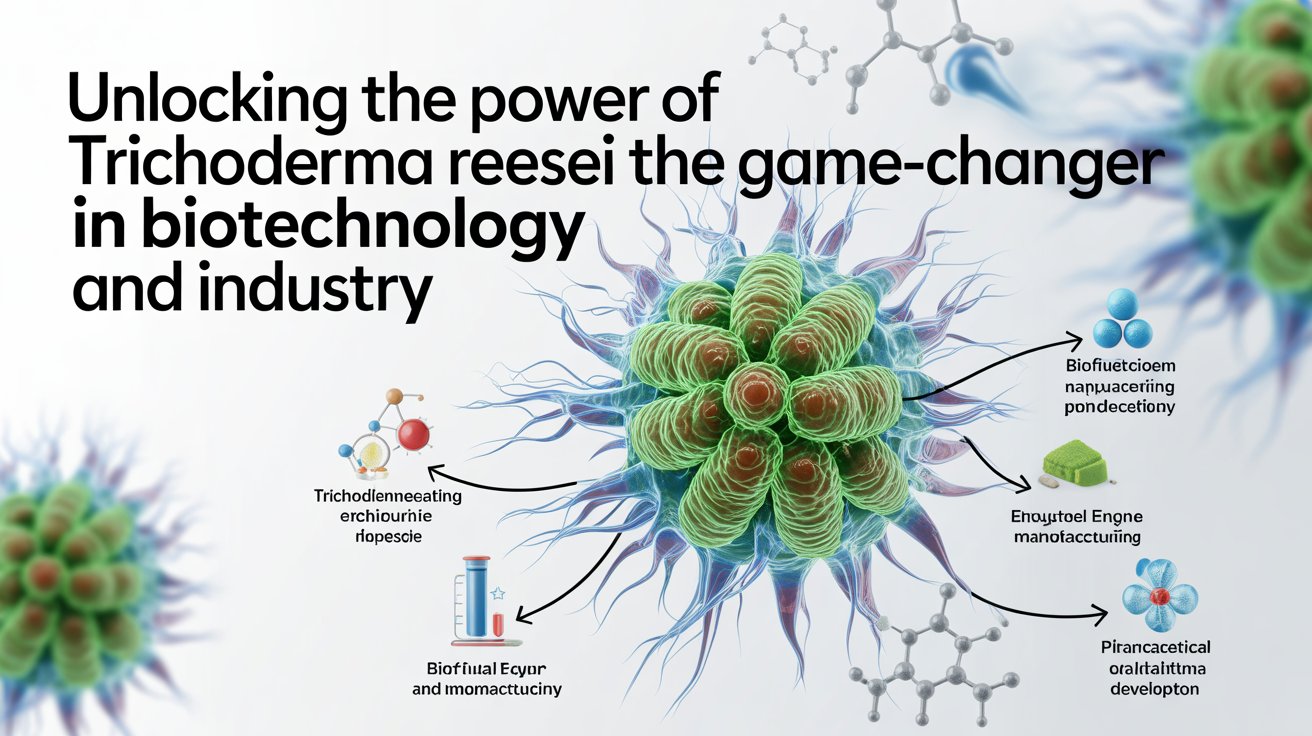
Trichoderma reesei, a naturally existing fungus, is an incredibly strong enzyme producer. This fungus has significantly impacted and changed a number of global industries through the use of biologically efficient and sustainable solutions.
Enzymes made from Trichoderma reesei used in cellulose, hemicellulose, and a variety of industrial products are among the most commonly produced by this organism and can be used to break down plant biomass and produce simple sugars that can be used to produce biofuels, and food products, and in the manufacture of textiles and paper.
As a result of the significant amount of enzymes produced and its ability to adapt to new environments, Trichoderma reesei is regarded as a key industrial organism in today's technology. Utilising Trichoderma reesei to produce environmentally friendly products can assist in reducing the usage of environmentally harmful chemicals in the production process.
Every application of Trichoderma reesei has demonstrated the potential for creating a sustainable and innovative future for all industrial applications, from renewable energy to mass production.
Understanding Trichoderma reesei: What Makes This Fungus Unique?
Trichoderma reesei has proven to be one of the most famous fungi in the genus Trichoderma and has been established as an essential filamentous fungus that produces enzymes worldwide. Unlike other species of Trichoderma, such as T. viride, which are used primarily as biocontrol fungi or mycorrhizal fungi, Trichoderma reesei has been used for biotechnology and has also functioned as a primary industrial source of filamentous fungi for textiles, food products (e.g., enzymes for use in brewing or baking), and paper products. Because of its ability to process cellulose into fermentable sugars both efficiently and economically, Trichoderma reesei has become an important contributor to the biofuel industry.
The other additional differentiator between Trichoderma reesei and other Trichoderma species is its ability to produce and secrete very high levels of cellulases and hemicellulases, thus enabling the development of products that are both sustainably and cost-effectively produced.
Classification and Characteristics of Trichoderma reesei
The millions of species in Trichoderma are all filamentous fungi that are commonly researched because of their potential use in both agriculture and industry.
Key Characteristics of Trichoderma reesei:
- Classification: Filamentous genus of Trichoderma.
- Known for being one of the most highly cellulase-producing organisms isolated to date.
- Habitat is primarily in soil and on organic matter that is decomposing.
- Potential applications include Industrial Biotechnology.

Based on these characteristics, Trichoderma reesei is one of the most significant industrial microbes.
Why Trichoderma Fungus Is Ideal for Industrial Use
The Trichoderma fungus family has a high adaptability, rapid growth, and is highly efficient at decomposing complex organic materials.
Criteria for suitability in industry:
- Creates large amounts of enzymes
- Converts biomass into fermentable sugars
- Creates renewable energy
- Reduces reliance on caustics
Due to these attributes, Trichoderma reesei is essential to sustainable biotechnology.
Differences Between Trichoderma reesei and Plant-Focused Species:
Several species of Trichoderma can be used for plant-based applications; however, Trichoderma reesei is traditionally viewed as an industrial species.

Unlike Trichoderma species that traditionally function in agriculture, Trichoderma reesei is typically used at larger scale for the production of enzymes in a biotechnology setting.
These differences make Trichoderma reesei a major advancement in the world of biotechnology, while most other strains are prevalent in applying Trichoderma species to agricultural markets.
The History and Discovery of Trichoderma reesei
The life history of Trichoderma reesei differs from many other trichodermic fungi. While there are numerous species of trichoderm on the planet that are very widely known as trichodermic fungi in agriculture, Trichoderma reesei achieved fame and acclaim because of its ability to produce commercial enzymes on an industrial scale.
Therefore, its discovery represents the beginning of the era of fungal biotechnology, thus laying the groundwork for the production of modern biofuels and commercial enzymes. This path from an incidental finding to an important global industrial player tells the story of many years of progress in scientific knowledge.
Discovery During World War II in the Solomon Islands
During WWII, Trichoderma reesei was found on the Solomon Islands.
Noteworthy findings:
- Damaged military cotton supplies for the U.S.
- Was found to be able to grow well in warm, moist, tropical environments.
- Is well known for being a strong cellulose degrader.

Early Research Milestones in Fungal Biotechnology
When first discovered, extensive research took place on Trichoderma reesei's enzyme system.
Among major research milestones:
- High cellulase-producing strains were identified
- Strains were optimized for enzyme production during industrial fermentation
- Genetic studies were completed to improve enzyme yield
- Industrial scale-up of enzyme production systems were developed
In this way, unlike trichoderma's use with plants as a form of disease control and improving soil health, Trichoderma reesei has developed into an important industrial enzyme biotechnology platform.
How T. reesei Became a Model Industrial Fungus
Through years of evolution, Trichoderma reesei has become an emerging model organism for research in Industrial Microbiology.
Reasons why it is successful in industry:
- High capacity to secrete enzymes
- Ability to adapt to fermentation
- Genetic manipulation for improved strains
- Reliability in producing biofuels and making paper

While several other Trichoderma species have taken over as the predominant species, Trichoderma reesei continues to be the backbone of global biotechnology.
The Science Behind Trichoderma reesei’s Enzyme Production
Industrial enzymes are produced from a wide variety of Trichoderma species, but Trichoderma reesei has been engineered specifically for the production of industrial enzymes in large amounts. It is one of the few known Trichoderma species whose fungus is designed and optimized for large-scale production of enzymes.
Trichoderma reesei has a very powerful enzymatic system that enables industries to use biomass from plants to create products such as biofuels, paper pulp, textiles and food ingredients. An overview of Trichoderma reesei science is based on the following three important aspects: efficient enzyme production; biomass breakdown; and scalability of fermentation processes.
Cellulase and Hemicellulase Secretion Mechanism
Trichoderma reesei is famous for its capacity to generate extraordinary quantities of cellulose and hemicellulose enzymes.
The process for T. reesei to secrete cellulose and hemicellulose enzymes occurs as follows:
- T. reesei recognizes that cellulose is present in its environment.
- It activates the genes that code for enzymes (cellulases and hemicellulases) while simultaneously producing these enzymes.
- T. reesei releases these enzymes (cellulases and hemicellulases) from its cells into the surrounding environment.
- T. reesei decomposes complex carbohydrates into simple sugars using these enzymes to create monomeric forms of glucose and xylose.

Due to T. reesei’s high production level of these enzymes, it represents one of the most productive industrial fungi currently available.
Breakdown of Lignocellulosic Biomass
Trichoderma reesei processes lignocellulosic biomass (plant materials), which consists of cellulose, hemicellulose and lignin.
Trichoderma reesei:
- Cellulose and Hemicellulose Targeting
- Transformation of Cellulosic Plant Waste into Fermentable Sugar
- Helps Produce Renewable Bioethanol

While many species of the genus Trichoderma have beneficial benefits to the agricultural industry, T. reesei is a significant contributor to the production of renewable energy and the industrial biotechnological industry.
Fermentation and Industrial Scale-Up Processes
Trichoderma reesei's compatibility with large-scale fermentation is a vital factor in its industrial success.
Trichoderma reesei has several industrial advantages:
- capable of growing well in bioreactors under controlled conditions
- produces enzymes at a constant rate throughout the fermentation process
- highly adaptable to genetic modifications to improve yields

Trichoderma reesei has become an icon of modern industrial fermentation processes through development of innovative fermentation technologies, and it is also a unique example of a trichoderma that is used for non-agricultural (i.e., enzyme biotechnology).
Applications of Trichoderma reesei in Biotechnology and Industry
Trichoderma reesei has become one of the key organisms used in the industrial process of biotechnology; however, the primary benefit of this fungus over other trichoderma fungi that are commonly found in agriculture on plant life is the ability of T. reesei to produce large amounts of enzymes.
This fungus produces large amounts of both cellulases and hemicellulase, which have enabled advances in the production of renewable energy, in addition to manufacturing practices and environmental responsibility in the industrial thoroughfare of commerce.
Trichoderma reesei is utilized by a variety of industries to convert plant waste into useful assets.
Enzyme Production for Biofuels and Biorefineries
Biofuels are one of the top applications for Trichoderma reesei and it is important in various
Ways to the bioenergy industry:
- Produces cellulose enzymes that break down biomass into glucose
- Contributes to the production of bioethanol from farm waste
- Increases the efficiency of biorefinery processes
- Decreased reliance on fossil fuels.

So Trichoderma reesei plays a major role in shifting the world to renewable energy.
Paper, Pulp, Textile, and Food Industry Applications:
The manufacturing sector has made significant use of enzymes that are produced by Trichoderma reesei, outside of biofuels.
Below are some examples:
- Pulp processing has been improved using Trichoderma enzyme technology in the paper industry.
- Adding softness and finishes to fabrics and textiles may also be achieved through the use of Trichoderma enzymes.
- Juice clarifying and food processing through the use of these enzymes is another.
- Trichoderma enzymes have also reduced the amount of chemicals required to produce goods.

Trichoderma's enzyme system allows for ways to produce goods in a more environmentally friendly manner as well.
Agricultural Biotechnology and Indirect Benefits for Plants:
Trichoderma reesei is not mainly used to promote plant health (similar to other trichoderma species), yet it indirectly contributes to sustainability in agriculture through its environmental impacts.
Indirect Environmental Impact of Trichoderma reesei on Agriculture:
- Conversion of agricultural waste into bio-based products
- Facilitation of development of biofertilizers and bio-inputs
- Support for the recycling of sustainable resources
While other trichoderma species have direct effects on plant protection (the basis of their usage), Trichoderma reesei has a positive effect on sustainability through the support of circular bioeconomy.
Trichoderma reesei contributes, through various industrial applications, as a major part of the biotechnology and renewable energy industries as well as a significant component of sustainable manufacturing.
Role of Trichoderma reesei in Sustainable Biofuel Production
Trichoderma Reesei is a key organism in making renewable energy systems and industrial biotechnologies possible, because of the ability of this species to produce large amounts of enzymes (to break down plant-based biomass into sugars), as well as having a high efficiency at breaking down cellulose into sugars – this gives Trichoderma reesei an important role to play as being one of the organisms used to convert non-useful agricultural byproducts into usable bio-fuel sources.
Conversion of Biomass Into Renewable Energy:
Trichoderma reesei's most significant contribution is that it can enzymatically convert lignocellulosic biomass to simple sugars.
Some of the processes in this conversion of plant material to sugar include:
- the secretion of cellulases and hemicellulases
- the hydrolysis of cellulose from the plant into glucose
- the fermentation of sugars to produce bioethanol.

This means we are turning waste into something valuable; we are taking plant materials that would have been thrown away otherwise and using them to create bioethanol.
Reducing Fossil Fuel Dependency With Fungal Enzymes:
The enzyme system from the species Trichoderma aids in decreasing fossil fuel consumption.
How does it help:
- Provides renewable fuel alternatives to petroleum products
- Reduces greenhouse gas emissions
- Increases productivity of second-generation biofuels.
- Faces energy diversification strategies.
By providing a low-cost way to break down biomass, Trichoderma reesei is facilitating the global switch to more environmentally friendly energy sources.
Green Technology and Circular Bioeconomy Models:
The species Trichoderma reesei is a key player in contributing to initiatives that support green technology and a circular bioeconomy.
Advantages of sustainability:
- Promotes the reuse of agricultural by-products.
- Encourages production through bio-manufacturing processes.
- Decreases the use of petroleum-based chemicals in the environment.
- Supports environmentally friendly and sustainable methods of production.

Trichoderma reesei and many other species in the Trichoderma family will improve crop vigor; however, Trichoderma reesei is also critical for supporting the sustainability of industry use through renewable energy and green biotechnology.
Advantages of Using Trichoderma reesei Over Other Microorganisms
Trichoderma reesei is one of the most notable organisms for enzymes and production in industry. While there are a number of species of Trichoderma that are used extensively in agriculture as plant trichoderma, T. reesei is specifically selected for its industrial enzyme production characteristics. Its ability to produce large amounts of cellulases, its adaptability/compatibility with fermentation processes and its inherent genetic variation will allow T. reesei to compete favourably against yeast, bacteria and other fungi.
All of these factors will make T. reesei a very attractive choice for application in biotechnology, biofuel production and large-scale manufacturing.
Comparison With Bacteria, Yeast, and Other Fungi:
There are numerous types of microorganisms that are utilised within industry, but there are few like Trichoderma reesei which have such high capacity for secreting enzymes.

Strengths of Trichoderma reesei:
- Outstanding production of extracellular enzymes
- Highly effective at processing cellulose and hemicellulose for commercial use
- Documented industrial reliability
This species of Trichoderma is specifically intended for use in industrial biotechnology, unlike those Trichoderma species used in agriculture.
Cost-Effectiveness and Industrial Scalability
Industries favour Trichoderma reesei mainly due to its cost-effectiveness and scalability.
Cost Benefits:
- The high enzyme yield of T. reesei has lowered the price of producing enzymes.
- T. reesei can be grown in large fermenters.
- T. reesei can be produced continuously.
- Strains of T. reesei are easily improved.

As a result of the above features, T. reesei will continue to be commercially successful for many years.
Environmental Impact and Sustainability Benefits
Trichoderma reesei provides environmentally friendly and sustainable systems of production.
Sustainable benefits:
- Less dependence on chemicals.
- No reliance on non-renewable energy, i.e. petroleum-based processes.
- Transforming agricultural waste into valued produce.
- Reduced overall carbon impact of agriculture.
While other species of Trichoderma enhance the health of crops by directly benefiting the plant through direct interaction, Trichoderma reesei enhances sustainability at the industrial level in the form of green technology, and promoting circular bio-economy.
FAQs
Q1. What is Trichoderma reesei mainly used for?
Trichoderma reesei is mainly used for large-scale industrial enzyme production, especially cellulases for biofuel and biotechnology applications.
Q2. Is Trichoderma reesei a trichoderma fungus used for plants?
Although it is a trichoderma fungus, Trichoderma reesei is primarily industrial and not commonly used as trichoderma for plants.
Q3. Why is Trichoderma reesei important for biofuel production?
Trichoderma reesei produces powerful enzymes that break down plant biomass into fermentable sugars for renewable bioethanol production.
Q4. How does Trichoderma reesei differ from other Trichoderma species?
Unlike species used as trichoderma for plants, Trichoderma reesei is optimized for high enzyme secretion and industrial biotechnology.
Q5. Is Trichoderma reesei environmentally friendly?
Yes, Trichoderma reesei supports sustainable processes by enabling renewable energy production and reducing chemical dependency.
Conclusion: Why Now Is the Time to Harness the Potential of Trichoderma reesei!
Trichoderma reesei represents the backbone of today’s biotechnology and is the foremost producer of industrial enzymes and extensively validated and established to perform in the manufacturing industry. This specific species of soured trichoderma allows for a cost-efficient transformation of biomass-to-energy while concurrently aiding in the development of clean energy sources and providing a path toward sustainable manufacturing practices across all manufacturing sectors.
The development of cleaner technologies and reducing reliance upon fossil fuels will necessitate the application of trichoderma reesei in fulfilling the ideal role of providing a 100% clean source of renewable energy for all people on this planet. Moreover, unlike other commercially utilized trichoderma strains, trichoderma reesei will lead to breakthrough innovations in biofuels, green processing, and closed-loop bio-economy models through harnessing their complete biochemical potential today.
Therefore, future investments into creative solutions, sustainability, and long term durability in industry will be achieved through the sustained growth and widespread adoption of T. reesei. The ongoing growth and application of T. reesei is critical for creating a future with a much cleaner and better planet.